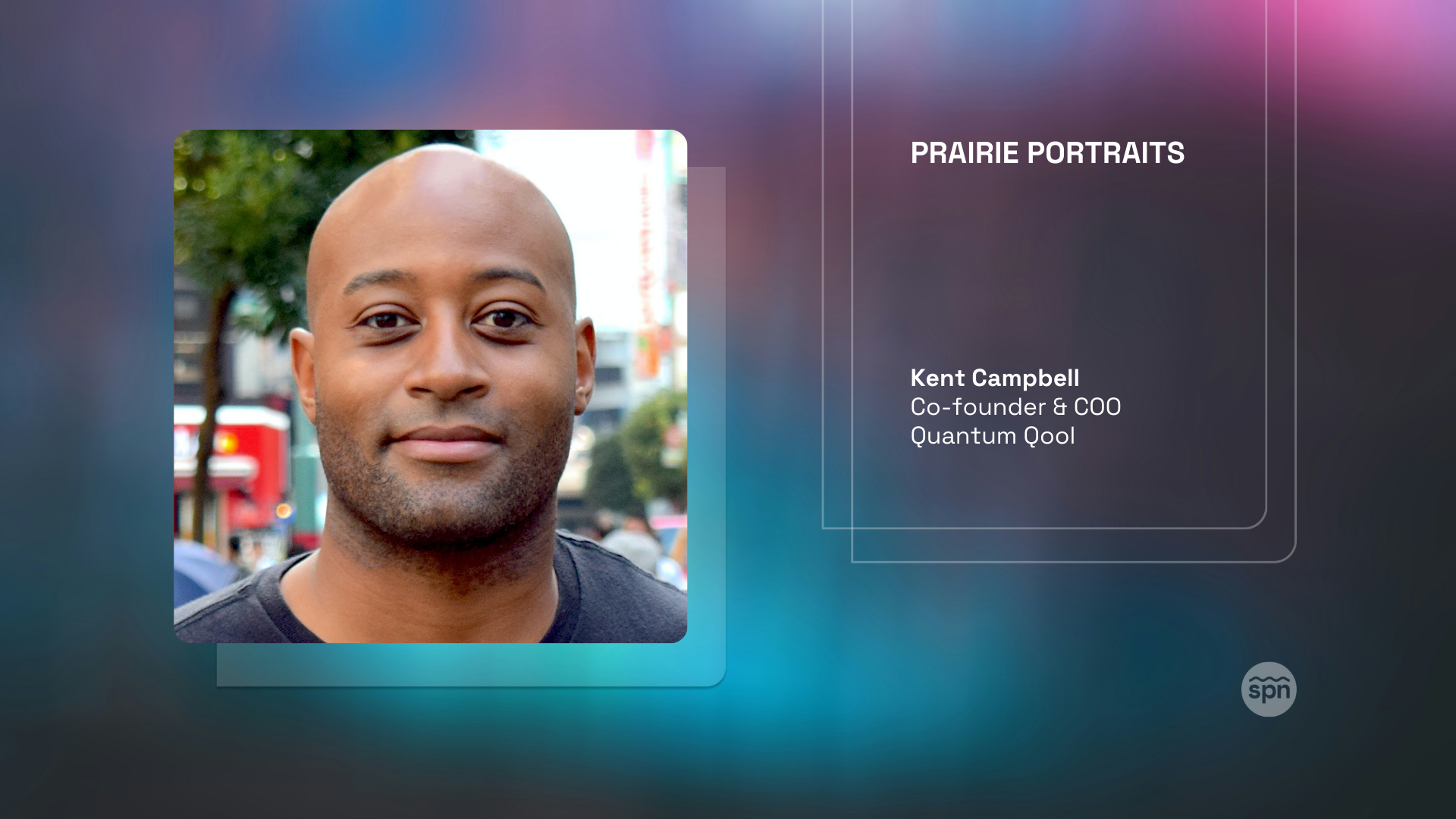
Meet Kent Campbell, Co-founder & COO at Quantum Qool
How would you describe the startup culture in Nebraska?
As someone who left the state almost a decade ago and is now returning, I would describe the startup culture here as “burgeoning”. I feel like there is some real momentum in terms of an ecosystem that is now in place to support startups across all ranges of industries. As someone who’s lived on the coasts for awhile, I feel like Nebraska has a shot to punch above its weight if things keep moving in the right direction.
How do you balance taking risks and making calculated decisions in pursuit of innovation?
In the startup world, you already know you’re taking a risk by getting up in the morning and trying to make something new happen, as 90% of startups fail within five years. The best you can do is try to lower your risk profile by doing innovative R&D, pilots, beta testing, partnerships, grants, etc. You can be innovative just by taking advantage of the resources around you.
How do you define success and what metrics do you pay the most attention to?
I define success by solving problems that customers actually have vs. solving problems that I or others think need solving. I love outside-the-box thinking, but at the end of the day, you want a happy customer. My metric for success is impact. If you’re making an impact, that means happy customers who want to keep coming back to you over and over again.
What are the top one or two challenges / opportunities Nebraska startups face?
I think the top challenge is the funding environment here in the state if you don’t already have a lot of traction (lots of customers/users, revenue, LOIs, etc). Some things are really worth taking a shot on, even as a thesis, because great ideas and founders can be found in the strangest places if given the chance.
What is one emerging industry or technology that you believe will have a significant impact on the Nebraska startup ecosystem in the next few years?
I’m a little biased, but I do think advanced manufacturing will have more of an impact in the state than people think. Especially when you combine the great resources coming from the Inflation Reduction Act and the CHIPS Act, along with the support of the University of Nebraska system and the Nebraska Department of Economic Development.
Whether it’s robotics in agriculture, battery materials from corn husks or 3D printing space components, Nebraska has a chance to take advantage of its great manufacturing talent and know-how to be a part of the advanced manufacturing revolution coming back to the United States. We know how to build physical things here and the opportunities are ripe for the taking.