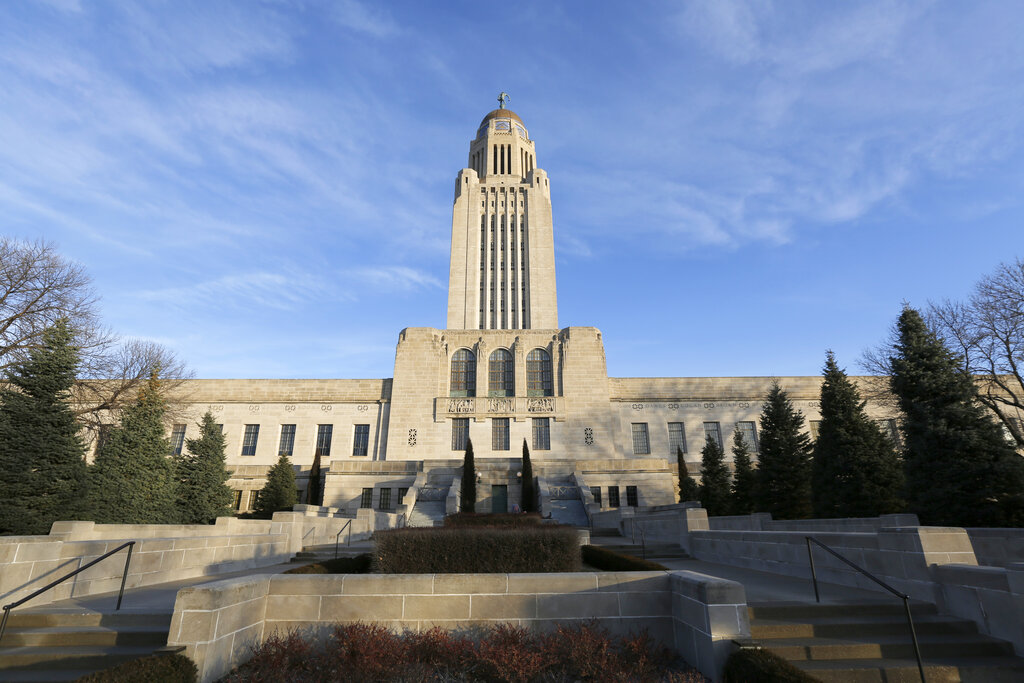
As the 109th Nebraska Legislature is underway, more than 700 bills have been introduced for consideration. Among those, the Center for Rural Affairs, a nonprofit founded in 1973 by Nebraskans concerned about declining economic opportunity in agriculture and small towns, has identified 12 bills it believes could significantly affect the state’s economic development, technology regulation and rural communities.
As of publication, the Center has named 12 pieces of legislation it considers potentially impactful. SPN is focusing on four of those measures that address major rural economic development issues, including housing, grocery access and renewable energy.
LB254 – State legislative intent to transfer funds for rural workforce housing
Sen. Bob Hallstrom introduced LB254, which proposes transferring a total of $50 million — $25 million in each of the next two fiscal years — from the General Fund to the Rural Workforce Housing Investment Fund (RWHF).
These funds would provide workforce housing grants administered by the Department of Economic Development under the Rural Workforce Housing Investment Act to support efforts that attract and retain workers in Nebraska’s rural communities. LB254 also includes an emergency clause, meaning it would go into effect immediately upon passage and approval, underscoring the urgent need for expanded housing resources.
LB375 – Adopt the Grocer Reinvestment Option Act
Sen. Teresa Ibach introduced LB375, proposing the creation of the Grocer Reinvestment Option Act. Under this legislation, the Department of Economic Development would administer grants to grocery stores in rural areas with fewer than 40,000 residents, or located in one of the state’s 90 least populated counties that demonstrate both financial need and the capacity to expand or enhance their offerings.
Recipients would be required to invest in eligible improvements such as technology upgrades, cooperative purchasing efforts and other innovations aimed at bolstering community food supplies. Priority would go to stores committing at least half of a project’s cost in matching funds, accepting SNAP (Supplemental Nutrition Assistance Program) and WIC (Women, Infants and Children) benefits and operating 10 or fewer locations.
The bill also establishes the Grocer Reinvestment Option Fund to help finance these grants, outlining requirements for spending and recouping any unused money, with the goal of supporting local economies and improving grocery access for Nebraskans statewide.
LB20 – Require the provision of electric service to customers that own an agricultural self-generation facility
Sen. John Cavanaugh introduced LB20, focused on what it calls “agricultural self-generation facilities,” which use clean energy sources, such as methane, wind, solar, biomass, hydropower or geothermal, to produce electricity on farmland. To qualify, these facilities must be 100 kilowatts or less in capacity, located entirely on the premises where the energy is consumed and be equipped to prevent any backfeed into the broader power grid. Importantly, this new category of power generation is distinct from net metering, where producers send excess electricity back into the grid in exchange for credits.
Under LB20, local distribution utilities whether they be public power districts, electric cooperatives or municipal electric systems, cannot deny electric service to a customer who also owns and operates an agricultural self-generation facility. Although owners of these facilities must adhere to any interconnection and safety standards set by the utility, the bill ensures that farmers and other agricultural operators who wish to invest in on-site renewable energy systems retain access to traditional electrical services.
The measure also clarifies that distribution utilities can recover their costs from owner-generators, meaning farmers who generate their own electricity can still be charged standard rates and fees for grid services.
LB503 – Privately developed renewable energy and “American energy friendly counties”
Senators Bosn, Ballard and Bostar introduced LB503. The measure aims to designate certain counties as “American energy friendly counties,” offering them the potential for increased tax revenues from privately owned wind, solar and other renewable energy facilities.
A key aspect of the legislation is that each county may opt to be considered for “American energy friendly” status by either a direct resolution of the county board or by placing the question before voters. Counties seeking this designation must meet specific standards in their zoning regulations. Once approved, the Department of Revenue will formally certify the county, post its status online and monitor compliance.
Should a county gain the designation, any new privately developed renewable energy facility in that county would pay a nameplate capacity tax at 1.5 times the usual rate. This increased tax would be directed to the local jurisdiction, potentially strengthening county budgets and funding community services. However, if a county ceases to meet the requirements or fails to fix any noncompliance issues, it can lose its “American energy friendly” status.
LB503 also creates the American Energy Friendly Counties Fund, administered by the Department of Revenue. This grant program would reimburse qualifying counties for consulting and legal costs associated with revising their regulations to meet the bill’s standards.
Next steps
All four bills are in various stages of the legislative process. They must each be heard in committee, where public testimony can shape or amend the proposals. The Center for Rural Affairs says it will closely monitor these discussions, advocating for policies that the organization believes will support rural communities.
You can see the rest of the bills stated as priorities by the Center for Rural Affairs here.