
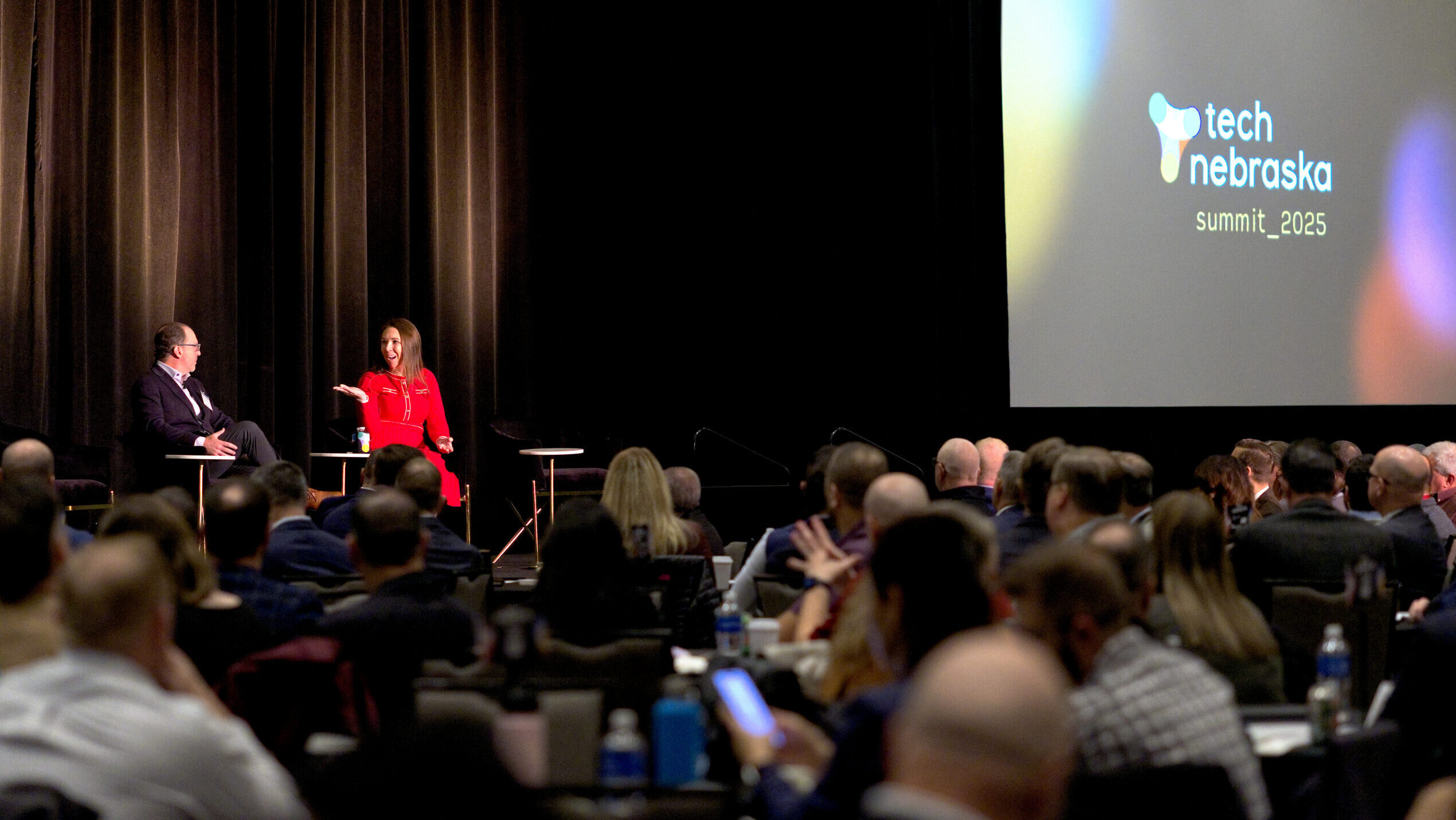
In 2023, companies ranging from Meta and Google to Kiewit Corporation and Werner Enterprises joined to form Tech Nebraska, the association and lobbying voice for tech in the state.
To start out, Tech Nebraska partnered with the Nebraska Chamber of Commerce & Industry.
The chamber “understood how to build associations from the ground up, and they already had established nonprofit status,” said Chris Dill, the chief information officer at Kiewit and the board chair of Tech Nebraska. “They had the ability to lobby in the Legislature already, and so it was a bit of a turnkey for Tech Nebraska.”
Three years later, Tech Nebraska is going its own way. By Sept. 1, the organization will become a separate 501(c)(6) as a nonprofit tech association able to lobby policymakers.
The move caps a period of growth for Tech Nebraska. In 2025, it launched a Tech Talks series and hosted hundreds of attendees at the third annual Tech Nebraska Summit. So far this year, while expanding membership and outreach throughout the state, the organization hosted a “Built Here” microsummit in Norfolk.
That growth signals how Nebraska’s economy is increasingly driven by high-tech development in traditional industries like agriculture, transportation and construction.
“We’ve built a strong organization with an engaged board, committed members and partners, a clear statewide role and the financial stability to support our work,” said Emily Allen, Tech Nebraska’s executive director.

“Independence is the natural next step, and it gives us the flexibility to invest our resources and attention where they can have the greatest impact,” she said. “That includes being a strong voice on policies that encourage innovation and investment and being more intentional about what Nebraska needs to attract, retain and grow technology and technology-forward companies.”
The split with the Nebraska Chamber is amicable, and the two organizations plan to continue to collaborate.

“We’re just excited for them,” said Joseph Young, the new president and CEO of the Nebraska Chamber. “A lot of their membership is a lot of our membership … we will continue to do what we’ve always done, and we’ll look to them as a resource on these types of issues. I suspect that we’re going to be very closely aligned on a lot of these business issues.”
As Tech Nebraska becomes independent, Allen said she wants to keep the organization lean. Rather than go right to hiring a large staff, she will consider what Tech Nebraska’s lobbying needs are and what outside partners make sense to work with.
Leaving the Nebraska Chamber is also a sign of the times for state and local policy, Allen and Dill said. Practically all aspects of government and business intersect with tech in some way.
“At the same time, the policy environment around AI, data, cybersecurity, digital infrastructure and emerging technology is becoming significantly more complex,” Allen said.
Dill is conscious that there was a chance the chamber and Tech Nebraska might not agree on certain topics. Under the old arrangement, the chamber’s opinion would have dictated Tech Nebraska’s position.
“The possibility that our members could have something they felt passionate about that we couldn’t ultimately voice because of that relationship — I think that’s probably the No. 1 thing that says, OK, you know what? It’s time for us to go it alone,” Dill said.
But he emphasized that Tech Nebraska is also grateful for the opportunity to be incubated at and learn from the chamber.
“They’ve been unbelievable partners,” he said. “They’ve really mentored us through a process that we otherwise would have just stumbled our way through.”
As Tech Nebraska goes independent, leadership wants to continue to expand across the state and be a connector across the state’s innovation ecosystem, from academia and corporations to startups and investors.
“We’ve spent the last several years building the foundation. Now we get to ask what Tech Nebraska can become as a fully independent statewide organization and what role we can play in helping Nebraska compete in an increasingly technology-driven economy,” Allen said. “That’s the part I’m most excited about.”


Leave a Reply