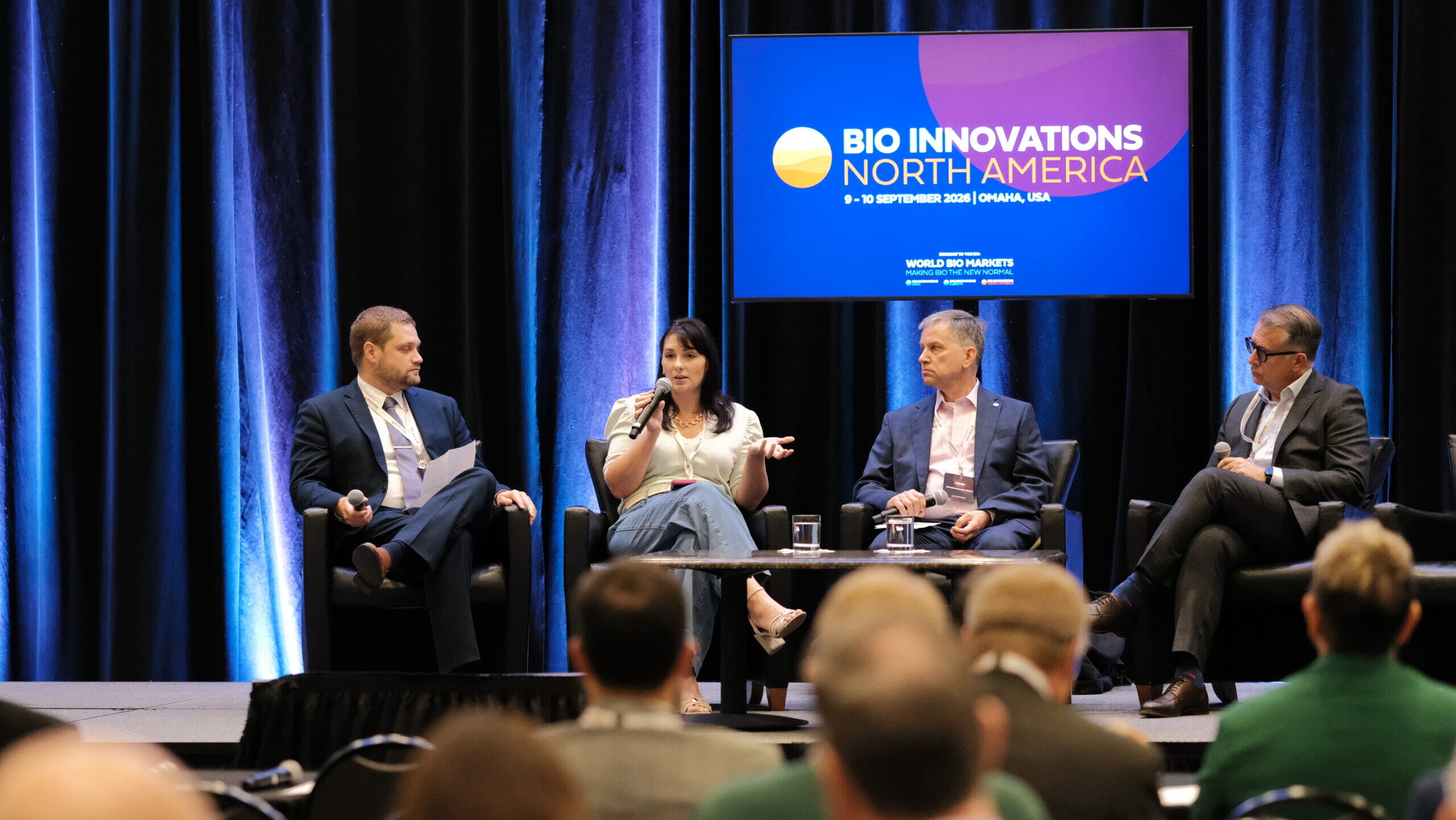
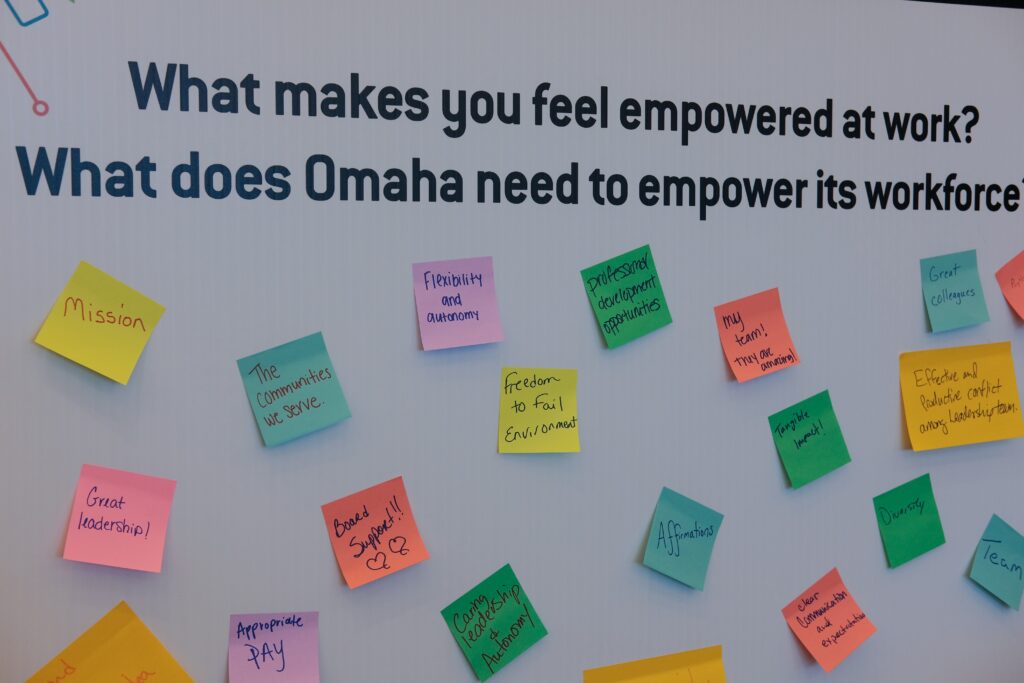
The Greater Omaha Chamber of Commerce held its first POWER Conference on Oct. 10 at the CHI Health Center, offering a range of speakers and breakout session leaders to teach about all aspects of Omaha’s workforce.
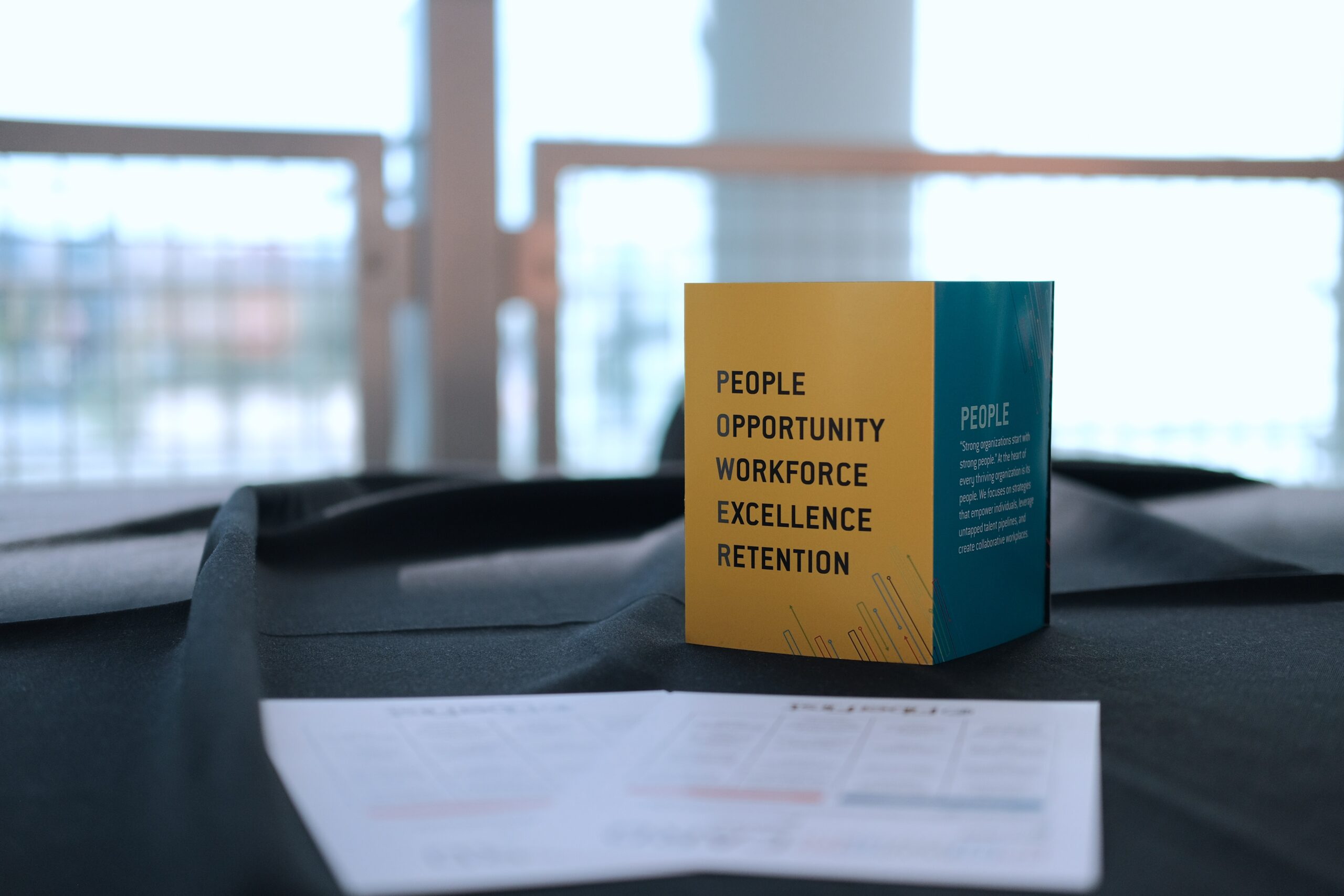
POWER is an acronym for people, opportunity, workforce, excellence and retention, the focus of the chamber’s new Workforce Development initiative. Participants represented all corners of Omaha, from the nonprofit sector to fintech, health care and local government.
Hanging over the conference: the notion that Omaha’s workforce, by some measures, is in a time of crisis. A lack of jobs and wage growth is leading educated and high-earning Nebraskans to leave the state for opportunities elsewhere. Meanwhile, the state’s population is trending older, and the younger generation is more diverse.
Among many challenges, this creates a need to better engage Gen Z, the youngest and fastest-growing part of the workforce, in today’s unique work environment. “People are working longer than ever before, into their 70s, 80s … so that means we have, legitimately, 60 to 80 years of range of when people enter the workforce (and) what their expectations are, what their norms are,” said Luke Goetting, a workforce consultant and speaker on Gen Z.
Goetting hosted a breakout session called “Unlocking Gen Z+ Potential: Future-Proofing Your Workforce for Innovation & Growth.” Participants nodded in agreement as Goetting noted common frustrations with Gen Z workers, from their unclear workplace expectations to lack of soft skills.
But Goetting also cautioned that Gen Z doesn’t exist in a vacuum. They have seen economic upheaval across the Great Recession and the COVID-19 pandemic. The pandemic also took an ax to soft skills, which are best developed in person. And this generation has a sense of doom as costs from health care to housing feel impossible to overcome.
“I am hoping that (highlighting those issues) can help us create empathy and connection with our Gen Z colleagues and co-workers, because the alternative is we can get very competitive with one another,” Goetting said. But there also are plenty of ways that different generations can relate to Gen Z — including in the dearth of compliments from their bosses (the subject of a viral TikTok video Goetting included in his presentation).
Engaging Gen Z isn’t “simply a touchy-feely kind of topic,” Goetting said. It’s really a bottom-line issue. Gallup surveys have found that high employee engagement translates to more productivity and profitability.
And many of the ways workplaces can be better about engaging Gen Z also translate to other generations. Goetting recommended being more transparent with workers, including providing the “why” behind decisions, and not saving critical feedback for an arbitrary check-in date months down the line.
“When a new generation doesn’t neatly fit into a box, the systems and processes that we’ve had a lot of success with, (they) don’t quite work the same way,” Goetting said. That’s frustrating, he said, but it doesn’t have to be bad. Understanding that means learning “how to connect with this new generation and hopefully empowering them,” he said, “because, of course, they are the future leaders as well.”
Workers with disabilities are untapped potential
Roughly one in four Americans has a disability. But to many employers, disabilities are seen as a liability — from concerns about costs for reasonable accommodations to not thinking people with disabilities can meet work expectations.
Studies show those concerns are largely unfounded. Not only do many reasonable accommodations not cost anything, but hiring workers with disabilities can improve workplace morale and even boost revenue.
That was the focus of a breakout called “The Power of Inclusion: Unlocking the Potential of an Untapped Workforce — How Embracing Disability Inclusion Can Fuel Business Growth and Innovation,” led by Sam Comfort, executive director of Angel Guardians, Inc.
Comfort has seen the benefit of facing down employer biases about disabilities. At a previous job, he recalled “supporting an individual who lost a limb and was working in this thrift-store environment, and was really struggling.”
The best solution: providing a chair at the cash register for all workers. “So it wasn’t that we were saying, ‘Hey, because you lost the limb now you get to sit,’ but we said, ‘Oh, we recognize that it is a reduction of strain on your body when everyone has the chance to sit at the cash register,’” Comfort said.

At Angel Guardians, Comfort continues that kind of work, as the nonprofit helps people with disabilities find and maintain work. Comfort emphasized that this isn’t about charity or infantilizing people with disabilities. Instead, he’s focused on competitive integrative employment, where people with disabilities are an equal employee.
“AGI currently supports about 48 people in competitive integrated employment throughout Omaha, and one of the things we have to fight is employers will sometimes say, ‘Well, I don’t want to write them up. They’re struggling, but we’ll work through it, it’s fine,’” Comfort said.
That kind of approach, he said, does a disservice to employees and employers. “If a person doesn’t meet performance standards because they’re not meeting standards, consequences are appropriate,” Comfort said. “Now, if we need to make sure there have been accommodations … that we’re supporting people to be successful, but success is not guaranteed.”
Once the trepidation around hiring people with disabilities is overcome, employers might be unsure about how to approach hiring. Comfort pointed to resources such as Nebraska Vocational Rehabilitation and the Center for Disability Inclusion at Boys Town.
He also said that employers need to have an open dialogue about worker needs — which can often benefit all workers, not just those with disabilities. That doesn’t mean employers should ask about disabilities, or that workers should disclose them.
“People with disabilities have the right to disclose whether or not they have a disability,” Comfort said. “What you can do as an employer is ask how a person is best supported. And we’re not doing this specifically for people who have disabilities. We’re asking this of all our employees, right? This creates a positive culture.”
Lev Gringauz is a Report for America corps member who writes about corporate innovation and workforce development for Silicon Prairie News.