A new era of innovation officially begins today at the University of Nebraska–Lincoln with the launch of the Frontier Tech Lab (FTL) during Silicon Prairie Startup Week. The first-of-its-kind collaborative prototyping hub is designed to give Nebraska innovators access to advanced manufacturing tools, engineering expertise and hands-on student support.
Housed within Nebraska Innovation Studio (NIS) and operating under the university’s Office of Research and Innovation, the Frontier Tech Lab serves as a bridge between idea and implementation — helping startups, researchers and small businesses move from concept to prototype faster and more affordably than ever before. The lab features more than $3 million in cutting-edge fabrication and visualization equipment, with capabilities ranging from 3D scanning and printing to CNC machining, electronics prototyping and advanced welding.
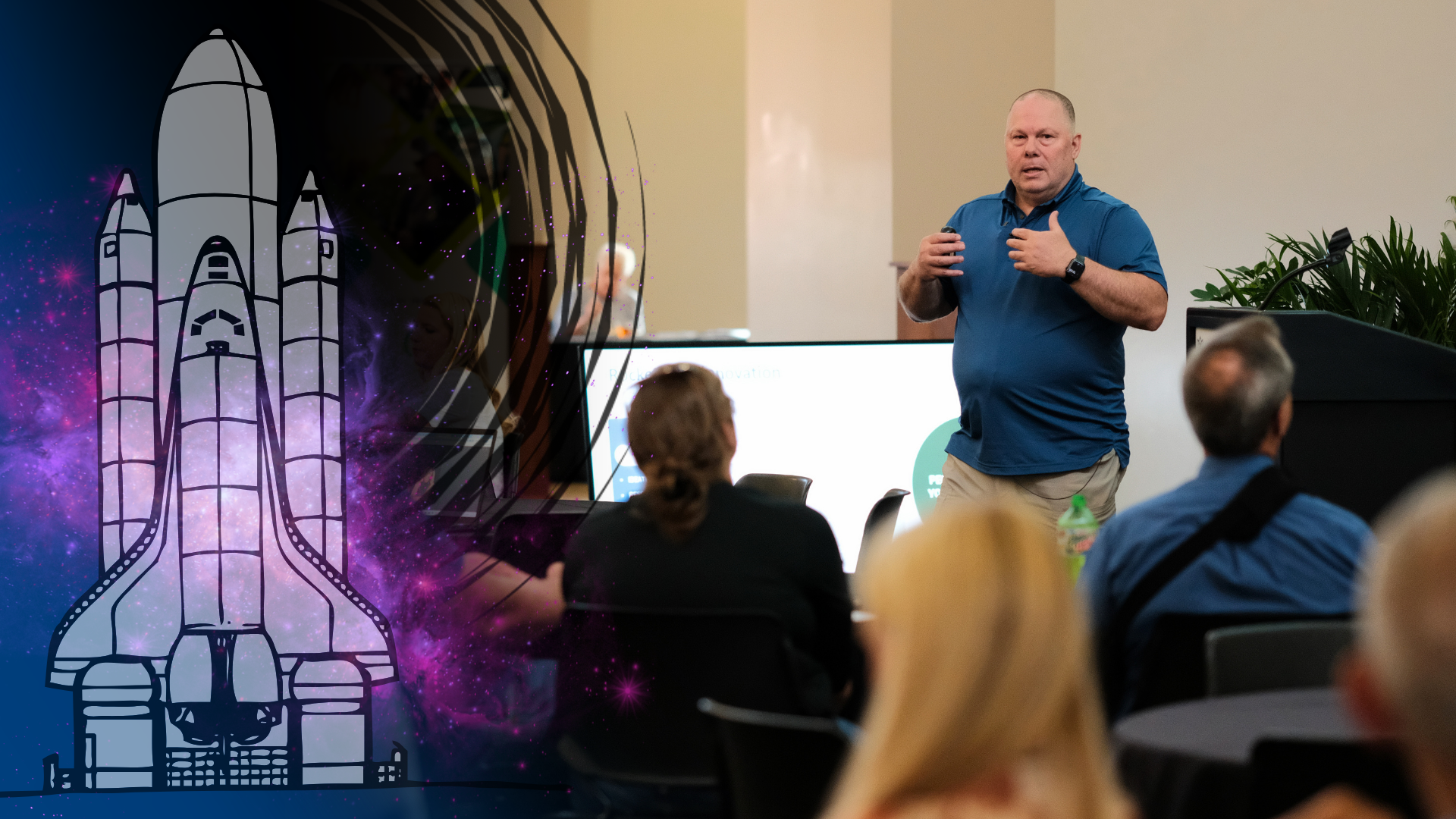
The goal, according to John Strope, program coordinator of NIS and director of FTL, is simple: to make the high-end tools of innovation accessible to everyone.
“For us, everything kind of culminated in this,” Strope said. He said Nebraska innovators have long expressed a need for affordable, fast and capable prototyping and tech development services, and that the Frontier Tech Lab was created to fill that gap, while also putting students at the center of every project.
Filling a gap in Nebraska
The idea for FTL began more than a year ago, sparked by a visit to Wichita State University’s National Institute of Aviation Research, a nationally recognized model for public–private collaboration in manufacturing. Strope and partners like Invest Nebraska’s Dan Hoffman and Director of NIS David Martin returned inspired to create something similar in Nebraska, but focused on the region’s unique strengths in agriculture, manufacturing and product innovation.
From there, the idea evolved into a detailed business plan, one that would take nearly a year of development, stakeholder coordination and internal approvals to bring to life. FTL is built to complement, not compete with, the existing industry, providing specialized support for projects that would otherwise be too costly or complex to complete in-state.
“We’re not here to compete,” Strope said. “We’re here to build capacity and provide access to these technologies that are normally either cost prohibitive to explore or adopt and usually take forever to do. To be able to do that locally is really cool.”
FTL operates as a service center embedded within NIS, leveraging its existing infrastructure while maintaining a distinct focus on client-driven, staff-led, student-supported projects. That model allows FTL to operate efficiently, offering internal university clients direct cost pricing with no markup on materials or labor and providing external clients with fair, competitive rates.
“This is an organization that I don’t think would be able to exist (anywhere else),” Strope said. “We’re able to leverage such incredible resources, staff expertise and facilities without intense capital outlay.”
FTL’s early impact
Even before its official debut, FTL had already proven its value through an extended “soft launch” phase. In just seven weeks of operation, the lab completed 11 projects, the same number they had projected for their first year for both university departments and private-sector clients.
One of those clients was Vital-IT, a medical device startup founded by Dr. Jason Johanning, which is developing a tool for assessing frailty in older adults. Working with Lincoln-based engineering firm CSS, Vital-IT needed to produce functional hardware prototypes rapidly. FTL stepped in to help.
Strope said FTL was able to deliver a better-performing solution in a fraction of the time and at a more competitive price point while giving students hands-on experience running industry-grade equipment.
Another early partnership with the University of Nebraska State Museum — Morrill Hall highlighted FTL’s potential to support education and public engagement. As the museum renovated its popular children’s Discovery Center, staff wanted to incorporate 3D-printed fossil replicas for a hands-on dig exhibit. FTL used high-resolution metrology tools to 3D scan, refine and print durable, lightweight replicas of fragile fossil specimens, allowing Morrill Hall to create realistic models without risking the originals.
Adam Eakin, associate director of the State Museum, said the collaboration made the project possible.
“FTL has brought a level of knowledge regarding materials, the printing process and design, which is invaluable to the project,” Eakin said. “The level of partnership and understanding has been incredible. FTL has taken the time to come alongside our team to help establish creative solutions. They took the time to understand the unique challenges we face when creating an exhibit with fossils millions of years old.”

“We are very fortunate to have FTL as a campus resource for our educational programs and public exhibits,” said Director of the State Museum Susan Weller. “Whether our request is to create replicas of enlarged microfossils, carrion beetles or fossil rhino bones, their expertise and client-centered service is greatly appreciated.”
These early projects illustrate the span of what FTL can do: serve startups, researchers, educators and small businesses alike.
Students at the core of every project
Every project the lab undertakes includes paid student roles, providing participants with the opportunity to gain direct experience with advanced tools, client communication and problem-solving. Students begin as technicians and can advance to engineering associates as they develop their skills and take on increasingly complex tasks.
“We want all of our projects to support that student’s professional development as well as their general skill building,” Strope said. “If there’s an opportunity for me to place two students in the middle of a project that has 50 years (of) combined wisdom of injection molding, tool and design, we’re going to jump at that chance. You know, everybody wins there.”
The lab’s structure offers an ideal environment for students to learn how to scope projects, work with clients and understand the technical and business sides of innovation. Strope hopes to expand opportunities for students to earn academic credit while working in paid positions.
Demand outpaces expectations
FTL’s launch couldn’t come at a better time. Across higher education, institutions face increasing pressure to demonstrate tangible impact. In Nebraska, innovators are seeking affordable, local options to prototype products without outsourcing development to other states.
“The folks who have been the loudest about wanting to collaborate with us are startups and entrepreneurs,” Strope said. “They’re able to save themselves, sometimes literally, a tenth of the cost of what they were paying to have something sent to Minnesota or Chicago.”
In the weeks leading up to launch, FTL fielded more project inquiries than they had expected to receive in an entire year. Strope said the interest confirms what he and others long suspected: there’s a deep hunger for practical, accessible innovation infrastructure in Nebraska.
“It’s always nerve-racking when you put so much energy and effort into developing something, and then you get right to the point of releasing it into the wild,” said Strope. “But I don’t think I’ve ever been this confident in the market fit.”
Building the future, one prototype at a time
For Strope and his team, the launch marks more than just the opening of a new facility — it’s the culmination of a vision that has been years in the making. By uniting high-end technology, student learning and community collaboration under one roof, FTL positions Nebraska as a leader in accessible, hands-on innovation.
“There’s never been a better time to do this,” Strope said. “With the overall environment of higher education right now, there’s an immediate pressure to demonstrate the value that we generate for our community … and now we get to build the mechanism for doing it right.”
Learn more and start a project at https://frontiertechlab.unl.edu/.