The University of Nebraska Medical Center used hologram “Holoboxes,” interactive touch walls and virtual reality headsets to link four campuses for a statewide stroke education conference on Sept. 26. About 150 health-care professionals and students in Omaha, Kearney, Norfolk and Scottsbluff participated in the “Stroke Transitions Across the Continuum” conference, designed to make distance learning hands-on and collaborative rather than passive.
Hosted inside the Dr. Edwin G. and Dorothy Balbach Davis Global Center, UNMC’s 192,000-square-foot clinical simulation hub, the event was produced through iEXCEL, the university’s program focused on high-fidelity simulation, interprofessional collaboration and experiential learning. The three technologies worked together, allowing teams at each site to work through the same patient cases simultaneously and communicate with one another in real time.
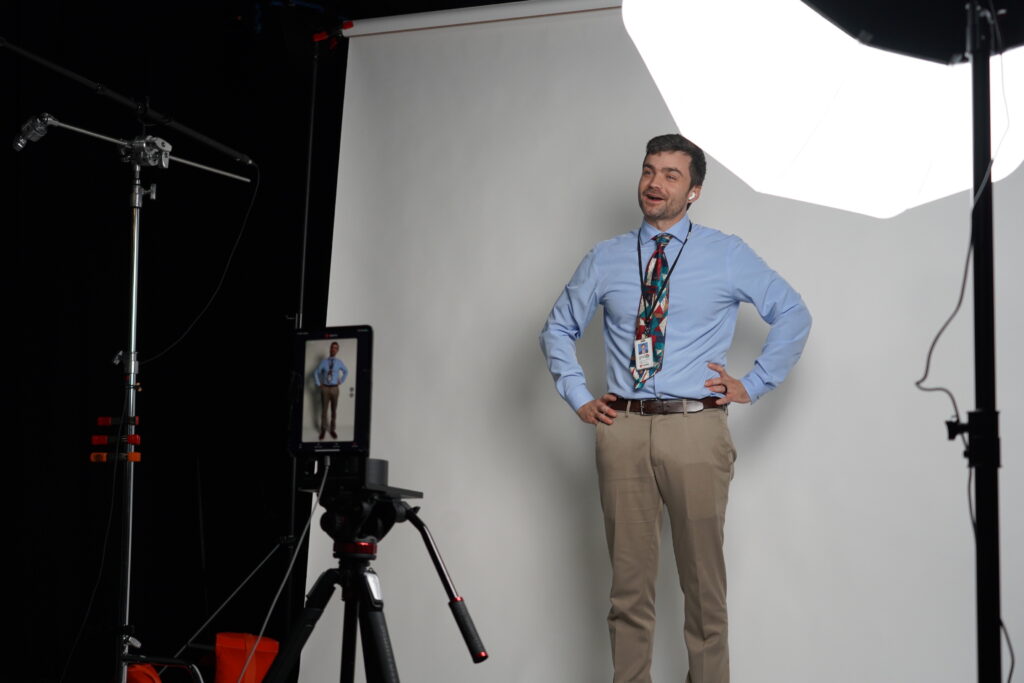
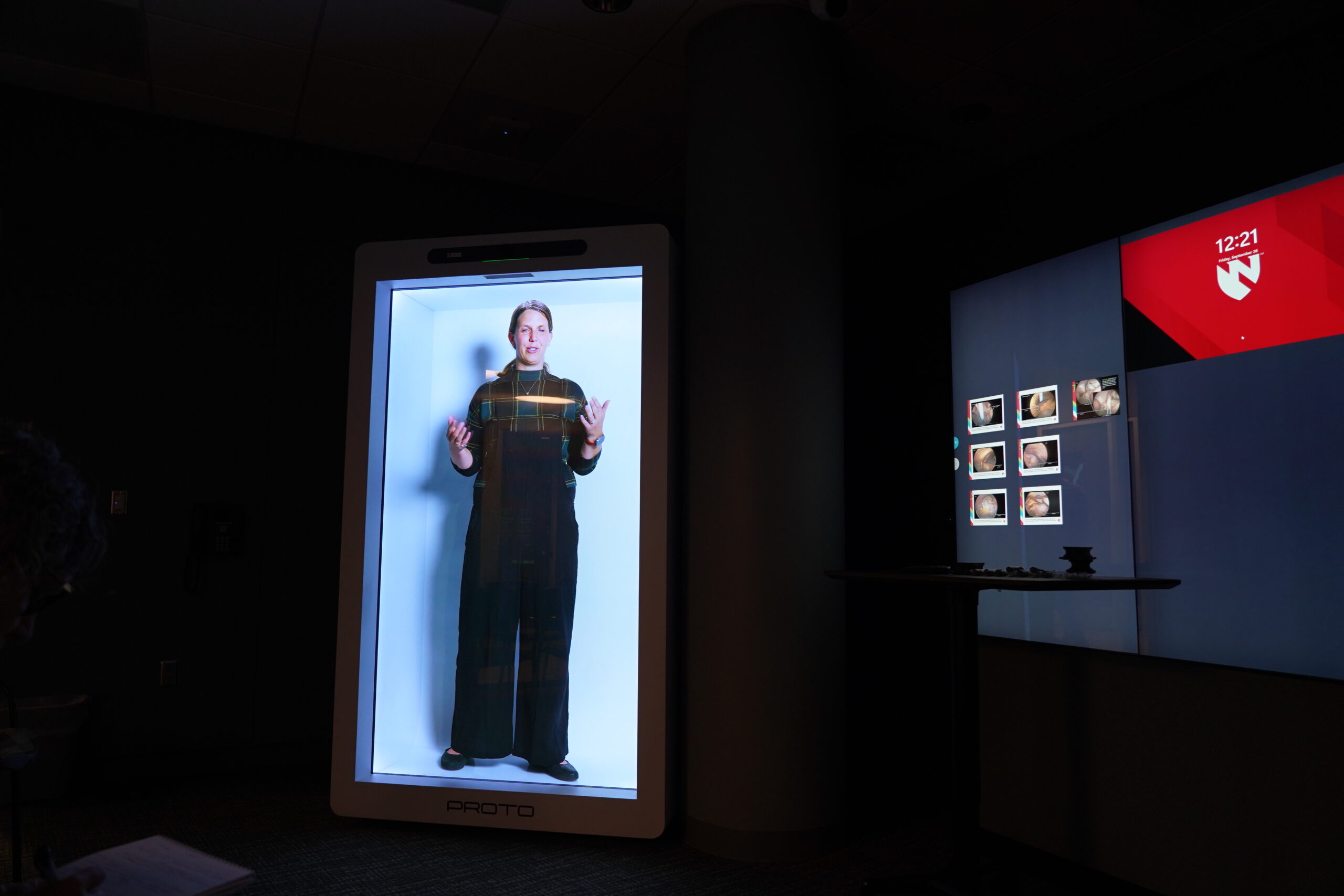
The Holoboxes supported live and prerecorded segments, including patient stories and remote media interviews. Nichole Cooks, stroke program coordinator with Nebraska Medicine, said the system let presenters appear “as if they were in the same room” with learners across the state, while technical staff managed audio, camera placement and reflections to keep images lifelike on the transparent displays.
VR headsets allowed participants to explore shared 3D content, including brain anatomy and scan-based models tied to the cases from different cities at once. Headset feeds, touch walls and hologram boxes were synchronized so learners could interact with the same content simultaneously and compare decisions across locations.
Touch-enabled iWalls formed the backbone of a series of “virtual escape rooms” built around the stroke-care continuum. Multidisciplinary teams received a page from EMS, triaged a suspected stroke in the emergency department, made transfer decisions to a comprehensive stroke center and then shifted to inpatient therapies and discharge planning.
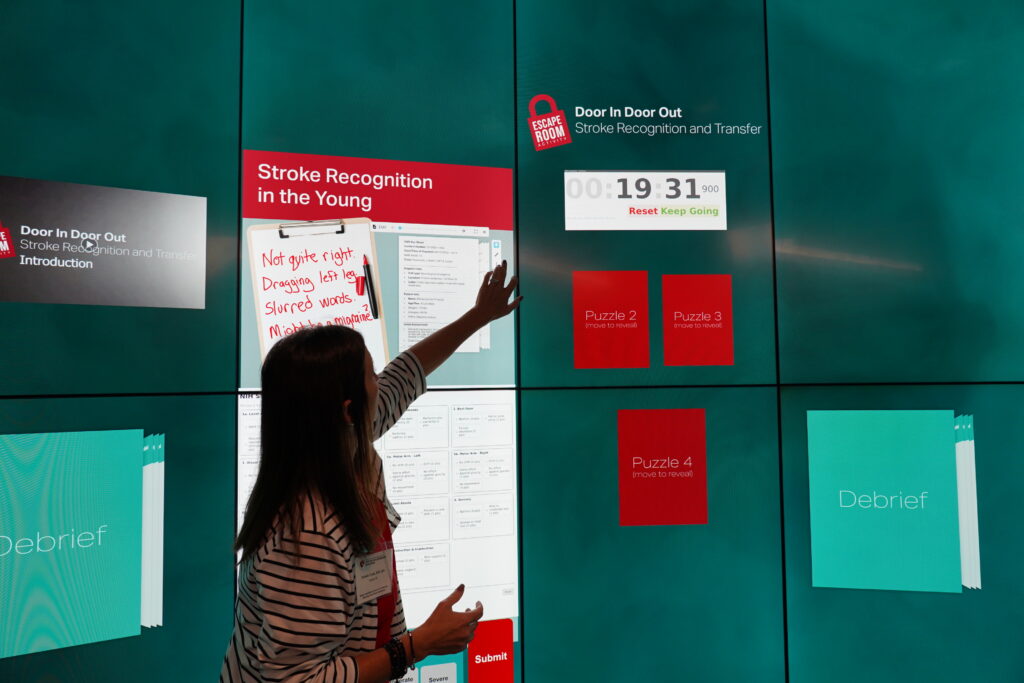
Puzzles on the walls required participants to review charts, interpret imaging, apply neurology scales and select treatment steps before advancing. Cooks said the format intentionally mixed nurses, physical therapists, occupational therapists and speech-language pathologists to encourage peer-to-peer learning.
Ben Stobbe, UNMC’s assistant vice chancellor for advanced and statewide simulation, who spoke from Kearney via Holobox, said the approach is a step beyond videoconferencing.
“While the technology allows us to interact with the content, it also allows us to see each site, so you feel like you’re in the classroom, this statewide classroom, with all of their peers and be a part of the learning as it goes through here,” Stobbe said.
Behind the scenes, staff coordinated live feeds across sites. One aspect of the conference was the pre-recorded speakers, who were displayed within the Holoboxes at all four locations. Using the holograms and combining live segments with edited patient narratives helped crystallize valuable lessons and takeaways while maintaining the pace of a distributed event.
“(This conference) goes right in line with our new statewide mission to really reach learners all throughout the state of Nebraska, no matter what campus they’re on,” said Michael Hollins, UNMC’s assistant vice chancellor for creative production and emerging technologies at iExcel. “It’s really about providing that really critical training.”
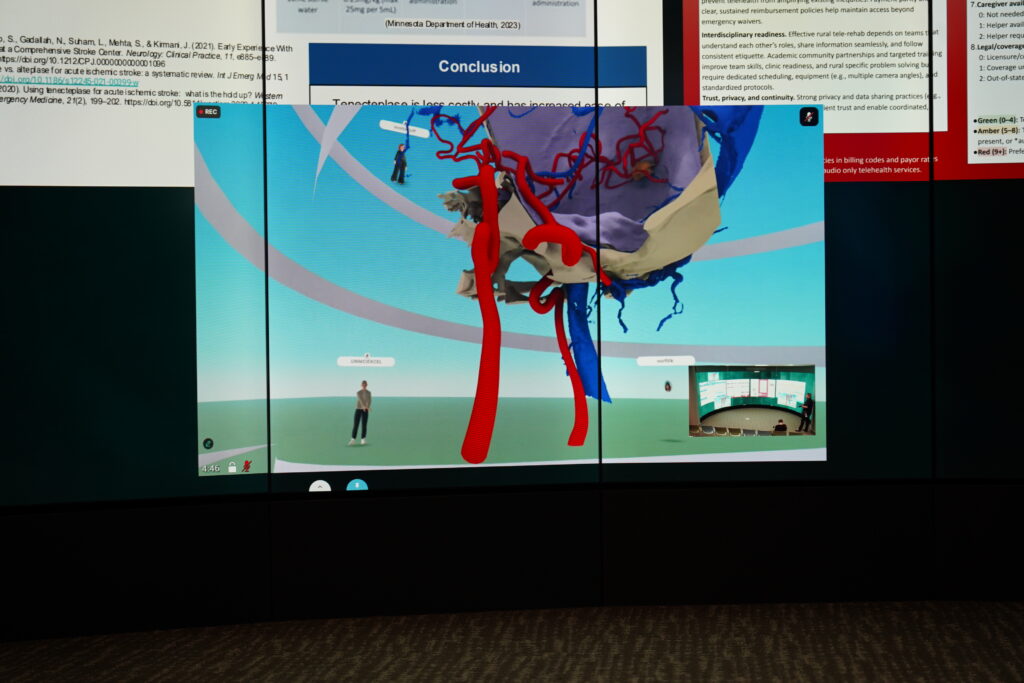
Stobbe described the three-part stack — Holobox for live and prerecorded presence, interactive walls for team-based decision points and head-mounted displays for immersive scenario work — as a distinctive combination for a synchronous, statewide conference.
Cooks said this year’s conference format was “way cooler” than prior iterations. “There’s nothing like this” due to the integrated technologies, she said. Based on participant response, UNMC plans to expand and refine the hologram-enabled, multi-site model for future conferences and other clinical topics to improve patient outcomes through more engaging, team-based training.