DARO, the Nebraska-based startup doing early detection of illness in livestock, won the fourth annual Innovation After Hours pitch competition on Dec. 9 in Lincoln. Held as part of the Nebraska Ag Expo, Innovation After Hours is a newer addition to the expo meant to uplift Midwest startups.
“If we’re bringing companies from around the world to our shows, how do we connect them with the community that we’re in and the people that are in this space?” said Phil Erdman, director of dealer and government relations for the Iowa-Nebraska Equipment Dealers Association (INEDA), about the motivation behind Innovation After Hours.
The exclusive dinner event was held at the Nebraska Innovation Campus. Roughly 150 attendees from Nebraska, Iowa, Missouri, the Dakotas and other states represented startups, investors, equipment dealers and farmers.
DARO won $5,000 competing with five other companies. Seismi, a startup from New Jersey that is developing health monitors for livestock, won the $1,000 people’s choice award. Seismi has also worked with The Combine, the agtech incubator and accelerator led by Invest Nebraska.
It’s a full-circle moment for Josh DeMers, DARO’s co-founder, who used to help organize Innovation After Hours when he was the program manager at The Combine.

“It’s so much fun to see the other startup companies, what they’ve achieved, what’s exciting here in Nebraska — but also, now that I’m on the flip side, I can take advantage of a lot of the people that (Innovation After Hours) brought,” DeMers said. “Now it seems a lot more like, ‘OK, so that’s what the entrepreneurs used to get out of it when I was on the Combine side.’ That’s what I’ve loved (about the event).”
DARO raised a $1.1 million seed round earlier this year. In his pitch, DeMers said the company is generating revenue, commercialized their first product in October and will be pitching to a Denmark agriculture initiative in January.
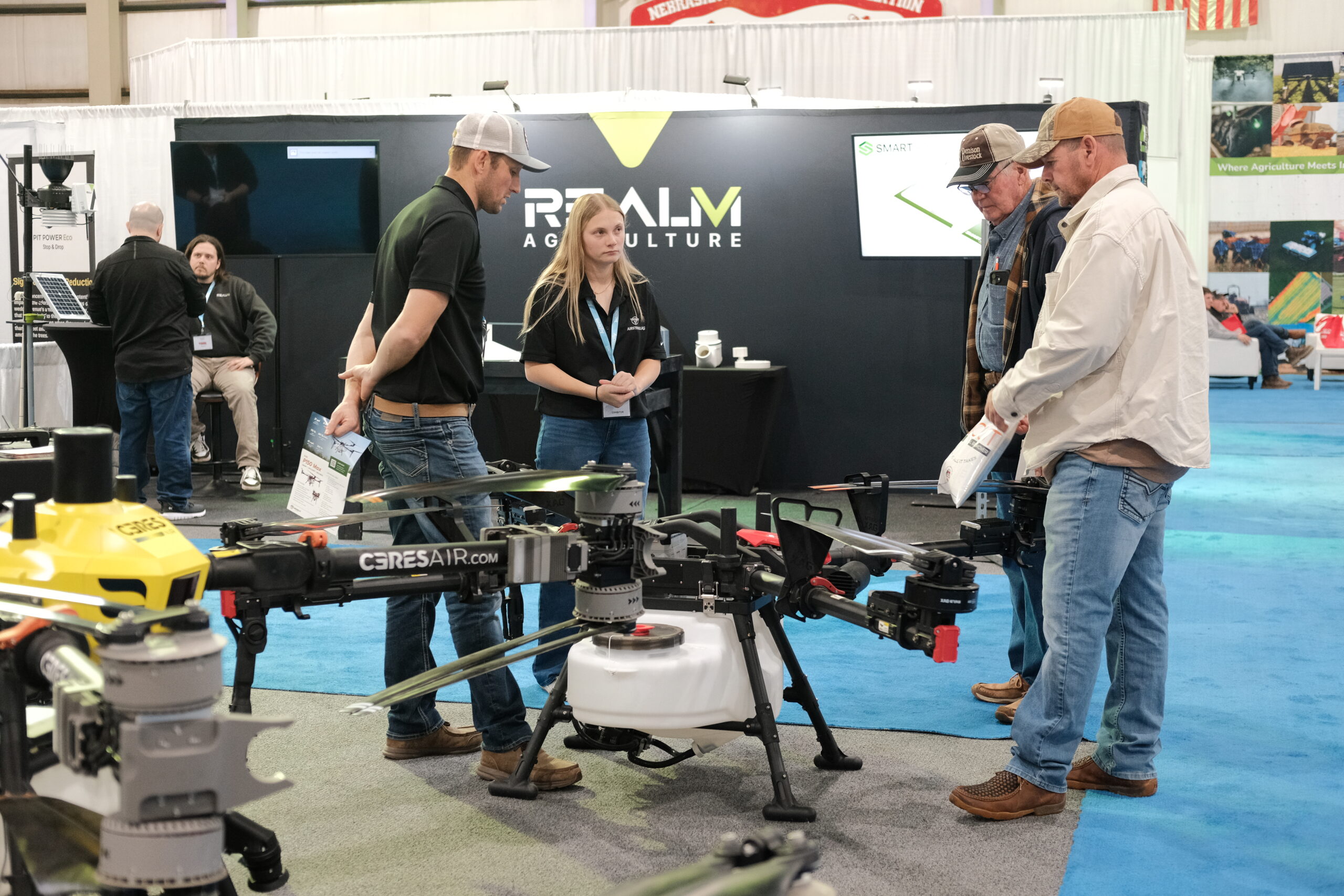
The Nebraska Ag Expo itself, owned and operated by INEDA, also had an area called the Innovation Hub to showcase startups and new technology.
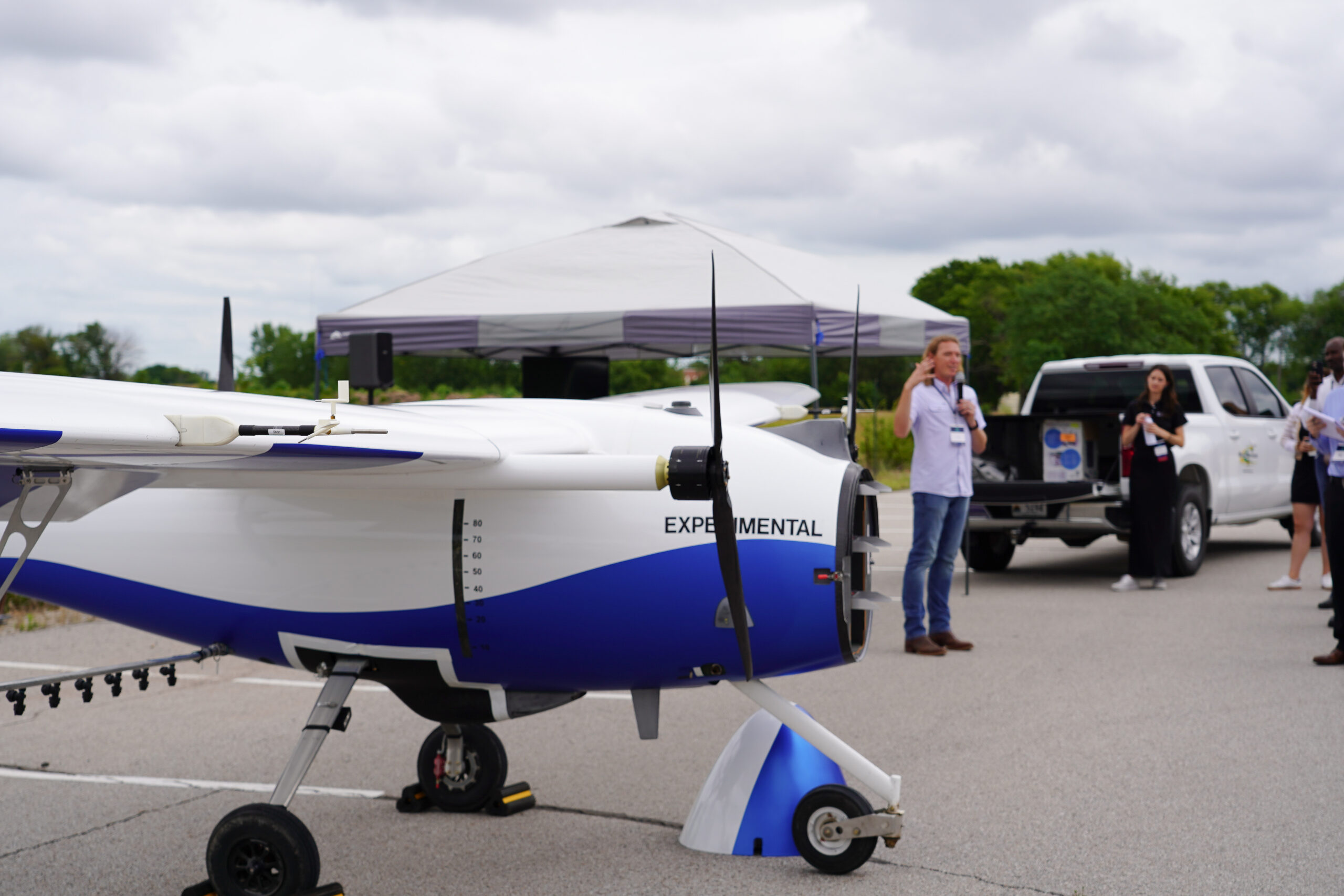
Attendees could speak to several drone companies, see a demonstration of a machine that kills weeds by zapping them with high-voltage electricity and hear about the latest field-sensing technology.
“The ag industry doesn’t get credit for all the innovation that goes on in this industry,” said INEDA CEO Mark Hennessey when speaking at Innovation After Hours. The Innovation Hub is meant to “put a stake in the ground and (celebrate) Nebraska, (celebrate) Lincoln as the hub of innovation for agriculture.”
Nebraska’s agtech scene makes progress, even in tough times
A regular theme of Innovation After Hours was celebrating just how far Nebraska’s agtech and startup community has come. Just five years ago, there wasn’t much to see, said Ben Williamson, co-founder of the Nebraska agtech venture capital fund Grit Road Partners.
“People would kind of look behind the curtain and say, ‘I don’t really know what’s going on in agtech. There’s not a lot of momentum,” he said. “Yet, you had groups like INEDA and the sponsors here tonight that were focused on building the Midwest into this global agtech powerhouse … Tonight is about a continuation of that mission.”
Erdman is proud of how INEDA has contributed to Nebraska’s agtech community, but points to that growth being possible only because of local partnerships.
“It’s kind of the Nebraska way,” he said. “We’re too small to be able to try to do everything on our own, and if we want to get big, we have to do it together for it to be meaningful. That’s kind of what’s happening here. We take pride in this, but we don’t take pride of ownership.”

Still, it’s a challenging time in agtech. With a downturn in the agriculture industry and fewer profits for farmers, there is less time and money to devote to new technologies. But agriculture has always had its ebbs and flows, Erdman said, and there always is an interest in innovation and entrepreneurship.
“I can remember growing up on a farm — we didn’t have the implement we needed, and my dad went and bought some steel and made it,” Erdmans said “Entrepreneurship has always been a part of (agriculture). And sometimes when times are tight, you get a little more creative and you find solutions that you wouldn’t have been looking for otherwise.”
Erdman sees INEDA’s role as helping today’s great startups build relationships and trust with farmers and to find a pathway to success — even in a tougher market. That’s why bringing 35 startups to the Innovation Hub, and six finalists to Innovation After Hours, is so important — especially because they are from across the country.
“It’s great to have companies that aren’t from Nebraska, when they come here, feel welcome, to know that they were valued, to recognize that we wanted them to be here,” he said. That “we felt like they were viable.”
The six startups at Innovation After Hours were:
- Agriwater, from Tennessee, transforms livestock, dairy, hog and feedlot manure into profit with a patent-pending mobile water treatment system.
- DARO, from Nebraska, provides whole-herd, non-invasive molecular pathogen and genomic strain surveillance, enabling early disease detection and outbreak prevention in livestock.
- Landoption, from Nebraska, makes land recruitment more efficient for conservation, renewable energy and agricultural programs by leveraging trusted networks, reducing costs and time, and ultimately enabling more competitive offers to landowners.
- Oaken, from Indiana, makes a cloud-based software platform that streamlines farmland lease management and landowner relationships for agribusinesses.
- Seismi, from New Jersey, provides veterinary devices that monitor heart rate, respiration and activity of companion and production animals.
- Senseen, from California, builds real-time, in-field diagnostic tools to help farmers make better decisions.
Lev Gringauz is a Report for America corps member who writes about corporate innovation and workforce development for Silicon Prairie News.