Over 15 years ago, Nebraska entrepreneurship was in a rough spot. The state ranked rock bottom for venture capital and lagged well behind the rest of the country for new business and job creation.
The local startup ecosystem was in its early stages, siloed and under-resourced. Investment group Nebraska Angels had just started in 2006. Many founders felt that if they wanted to raise money and be successful, they had to leave the state.
“A lot of people that were involved in startups at that time also really felt undervalued by the broader business community,” said Jason Ball, CEO of the Lincoln Chamber of Commerce and Partnership for Economic Development.
Nearly two decades ago, Ball regularly worked with startups as the director of business development at LPED. “There was a feeling that maybe startups weren’t celebrated, that policymakers weren’t focusing on creating a policy-based environment that supported more startup creation,” he said.
Soon, that began to change, in large part through the passage of the Business Innovation Act in 2011. The state legislation created programs specifically geared to funding early startups and supporting entrepreneurs.
Since then, research shows that BIA programs have helped startups bring in almost $16 in revenue for every $1 of state investment. Those businesses in turn created almost 5,000 total jobs, while making over a billion dollars in annual economic impact that generates $27 million in state and local tax revenue.
All this from about $60 million in total state dollars awarded to companies from 2011 through 2024. A little over half of that went to the prototype grant, one of the BIA’s flagship programs. A lifeline for startups, prototype grants help founders turn ideas into early-stage products to test markets and raise venture capital funding.
In 2016, a $50,000 prototype grant supported a new company trying to make life easier for contractors working on construction and other projects. CompanyCam would become Nebraska’s first unicorn, reaching a $2 billion valuation in 2025.
Other startups, supported by the BIA and making a name for Nebraska, include Workshop, Grain Weevil, Alpaca and Virtual Incision among nearly 900 awardees over the lifetime of the program.
“Doesn’t mean we’re perfect, doesn’t mean we can’t continue to get better, but it is just a fundamentally different ecosystem now, and I think for the better,” Ball said. “It highlights how things that start out as a policy conversation on the floor of the Legislature can really lead to becoming catalysts for really, really big things down the road.”
Giving Invest Nebraska wings
A key player in today’s startup ecosystem is Invest Nebraska, the state’s nonprofit partner for venture capital and entrepreneurship support. Some of the BIA’s funding is directed to the nonprofit.
Invest Nebraska is a regular co-investor (its money requires a funding match) in local companies, boosting the impact of homegrown VC like MOVE Venture Capital, NMotion powered by gener8tor and Grit Road Partners. That collaboration has driven the ecosystem from raising just $22 million in 2012 to a record $530 million for Nebraska startups last year.
But that success was not a given, being built on old policy failures and a few lucky breaks. The organization had a precursor in the late 1980s that was given $4 million in state funds to invest in startups. Just five companies received support then, to mixed results.
“It only existed for about three years,” said Dan Hoffman, the CEO of Invest Nebraska. “That oftentimes happens with legislators: They think about things in really short periods of time, when it takes many, many years for these programs (to be successful).”
Invest Nebraska was created by legislation in 2002 to try again. But it was given an even shorter leash with just $500,000 over three years to connect startups and potential investors. Then the nonprofit would be on its own.
This piece will appear in a new publication exploring Nebraska’s startup ecosystem through interviews with nearly 40 founders, companies and organizations across the state that Open Range is set to publish this summer.
Silicon Prairie News is proud to work alongside Open Range to help bring this publication to life.
It survived, with little to show for it, until being chosen in 2008 to run a new state program helping startups be investment-ready. Hoffman joined Invest Nebraska around the same time — and became part of a growing wave of startup interest that culminated in the BIA.
In the next few years, the Nebraska Departments of Economic Development and Labor hired Battelle, an economic development consulting firm, to evaluate the state’s business strengths and weaknesses.
The 2010 report had a strong focus on entrepreneurship and innovation and suggested policies to improve Nebraska’s dire scorecard. At the same time, Invest Nebraska worked with a legislative Innovation and Entrepreneurship Task Force on another report detailing many of the same concerns and solutions as Battelle.
Among the suggestions that made it into the BIA: A state-sponsored VC fund to invest in startups. “I think people understood you have an organization like Invest Nebraska … Instead of creating a new organization, maybe we just leverage that existing organization,” Hoffman said.
“That was the pivotal moment where (Invest Nebraska received) more resources to actually get in and assist companies with those fundraises,” he said. “It seems like yesterday that the BIA was passed, and so 15 years later, I don’t think any of us could have predicted the success of that program.”
Sustained legislative effort
In 2010, Heath Mello was a 30-year-old state senator in his first term serving on the Innovation and Entrepreneurship Task Force. At its first meeting, legislators were clear about the stakes.
“We’re very concerned,” said State Sen. Danielle Conrad, chair of the task force. “We want to ensure our economic development policies in Nebraska are as evolved and as competitive as possible so that we can have a bright and productive future for our state.”
It was a different time in Nebraska politics, Mello said. The push for more startup support was bipartisan, across age groups, and a joint effort between the Legislature and the executive branch. He co-sponsored the BIA bill that, despite some skepticism, was passed unanimously by the Legislature.
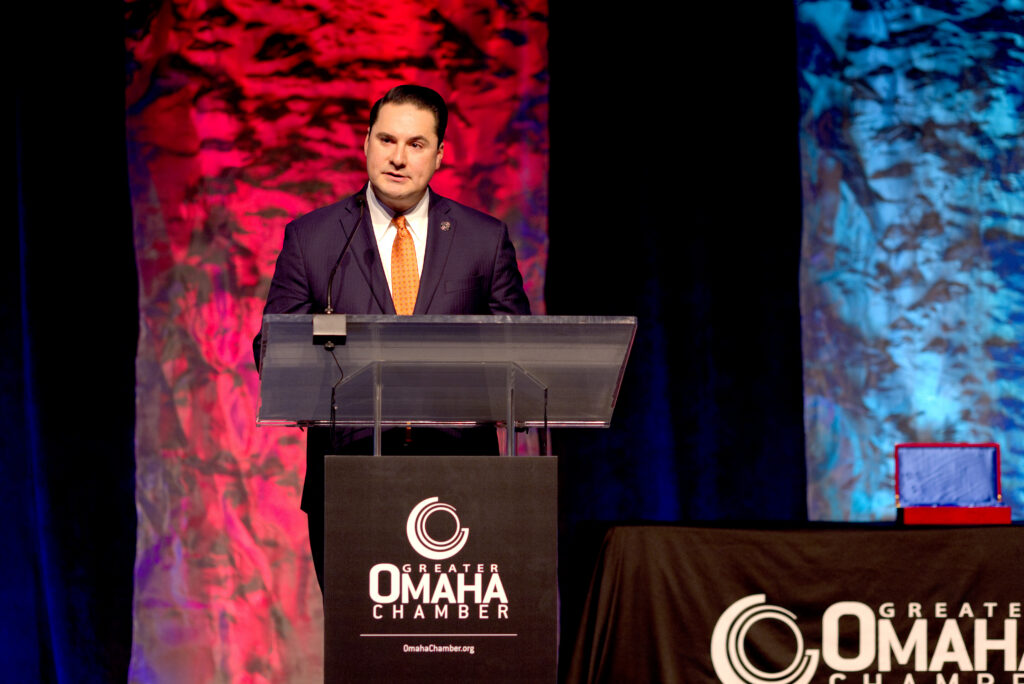
“You typically don’t see both branches of government work on the same issue independently of each other, and come to the middle … saying, ‘This is where we need to go,’” he said. “That was one of the most unique efforts in my legislative career.”
Today, Mello is the CEO of the Greater Omaha Chamber, where he sees the BIA’s success play out every day. With rising concern over Nebraska’s brain drain and jobs stagnation, the program is a more essential tool than ever for the business community.
The BIA shows that when “you invest in companies and in ideas that (bring) new talent to the region and help retain that talent … it’s a one-two punch in terms of the impact,” he said.
But the past year has also been a rocky one for the BIA. Gov. Jim Pillen proposed slashing the program’s budget in early 2025, then paused the BIA without a clear explanation in October.
That sparked two months of outcry and advocacy from startups, business leaders and policymakers. The BIA was reinstated in December, with Pillen now advocating to increase funding to $15 million by using state unemployment insurance tax funds.
The Legislature approved that plan during the 2026 session, bringing some stability to the essential startup program. The BIA’s widespread support, and the governor’s turn to boost it, speaks to just how successful and important the effort is, Mello said.
For the future, business leaders see an opportunity to continue investing in the BIA. “How do we strengthen it? How do we enhance it? How do we put more money towards it?” Mello said. “How do we become the best state in the country in terms of wanting to be a startup founder, locating your company here, and starting your company here?”
Doing so will mean continuing the BIA’s legacy of bipartisanship, and making sure all Nebraskans — not just those in Omaha and Lincoln — understand how the BIA has benefited them.
“That’s part of the overarching story: How do we move ahead in this turbulent, unfortunately very hostile time in our body politic, to keep things nonpolitical,” Mello said, “like the BIA and economic development … that we know leads to high-wage job growth and brings in a lot of capital investment to Nebraska.”
Lev Gringauz is a Report for America corps member who writes about corporate innovation and workforce development for Silicon Prairie News.