
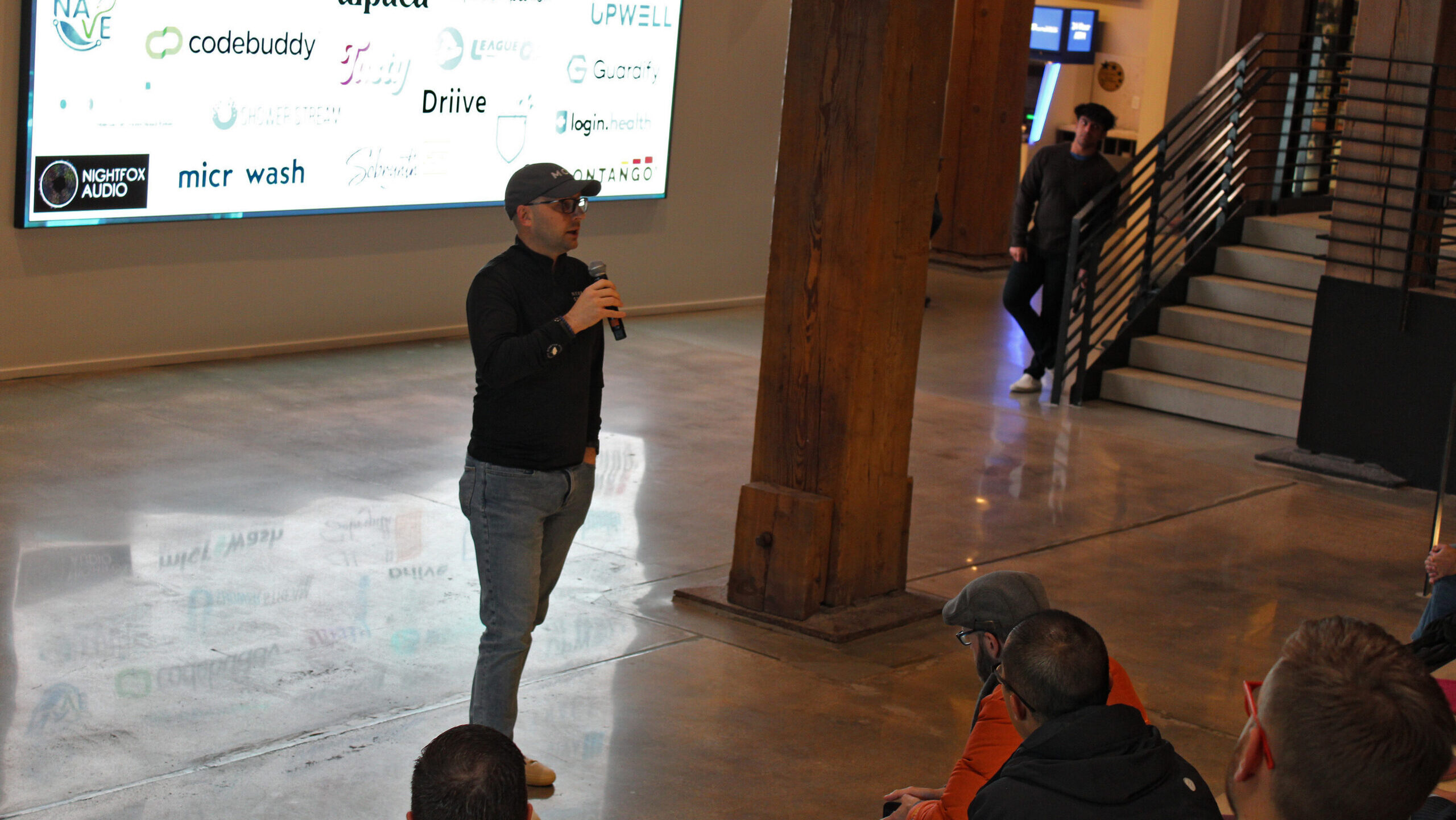
The Nebraska Department of Economic Development has suspended its $1.2 million grant to the Nebraska Startup Academy, the startup support nonprofit led by much the same leadership team as MOVE Venture Capital.
The agency shared a copy of the notice of suspension with SPN.
NSA’s grant is through the North and South Omaha Recovery Grant (NSORG) program, managed by DED, which is meant to support job creation, business development and economic revitalization in historically disinvested parts of the city. NSA was awarded the funding in early 2024.
DED cited NSA’s mismanagement of grant funding, undisclosed conflicts of interest and concerns about the reasonableness of expenses, which include $1,100 for office furniture and about $54,000 for professional development and travel.
DED already stopped disbursing NSA’s grant in December 2025 because of grant reporting issues.
Now, the NSA can’t use state grant funding for any expense without getting permission in writing from DED. The state grant makes up almost 90% of NSA’s total funding.
DED’s move comes hours after the Nebraska state auditor’s office released a preliminary review of the NSA’s grant. Despite the NSA’s 2022 grant application saying it would create over 300 jobs in three years, the auditor’s report found it created just four jobs across 2024 and 2025.
The NSA also significantly underreported its revenue, improperly handled its grant funding and has serious conflicts of interest, the report said.
Several startups supported by NSA received venture capital investment from MOVE. In its 990 financial documents, NSA did not disclose business relationships between its board members and employees, who also oversee MOVE’s investment funds.
Those board members were also paid by the NSA alongside employees, with over 80% of the nonprofit’s funding going to payroll.
“The (NSA) appears to have failed to report accurate jobs data even though nearly all of its funds were expended on payroll costs, resulting in the success and overall economic impact of the Academy’s work being inflated,” the report said.
As a result, the nonprofit may have violated the state’s abuse of public records law, be eligible to have its tax-exempt status revoked and to have its NSORG grant terminated.
“It is always the (DED’s) desire to allow curative measures or (to) take the least harmful reparative measure,” the department said in an emailed statement. But it “reserves and may use termination or other recoupment and award restricting methods where the Department determines the circumstances warrant and those methods would best protect taxpayer funds.”
As of 4:40 pm on Tuesday, Charlie Cuddy, the NSA’s executive director, said he had not been notified of the grant suspension. He pointed to DED’s drastic staffing decrease and inquiries into the agency’s operating capacity that created grant reporting inconsistencies that affected the NSA.
“Reimbursements have been pending for more than nine months, during which time NSA has continued delivering programming and supporting founders across Nebraska,” Cuddy said. “We remain committed to working with DED to address any outstanding reporting requirements.”
SPN sent Cuddy the suspension notice DED had provided. As of this story’s publication, Cuddy and NSA have not responded to the notice.
“It’s unfortunate that fund abuse occurs,” said State Sen. Margo Juarez, who represents South Omaha, in an email. “Effective program management is also important … The governor needs to ensure the state operates efficiently and effectively in many areas.”
State Sen. Ashlei Spivey, who represents part of North Omaha, declined to comment. State Senators Terrell McKinney, who represents part of North Omaha, and Dunixi Guereca, who represents part of South Omaha, did not reply to requests for comment.
The auditor’s report and DED’s suspension notice come several months after Scott Henderson, the managing principal of startup accelerator NMotion powered by gener8tor, posted on LinkedIn about the NSA and MOVE Venture Capital.
Henderson alleged many of the same issues found by the auditor’s report and called on NSA and MOVE leaders to return the taxpayer money they had received. Henderson later deleted his LinkedIn post. He declined to comment for this story.
Dan Hoffman, CEO of the state’s nonprofit venture capital organization Invest Nebraska, declined to comment for this story. Hoffman previously served on the boards of both NSA and NMotion, stepping down in September due to time commitments.
NSA has been a subcontractor for Invest Nebraska, with Invest Nebraska awarding over a quarter of a million dollars in federal small business support funding to NSA, according to the auditor’s report. Invest Nebraska has also co-invested in many startup deals with MOVE.
SPN also reached out to Trevon Brooks, the CEO of North Omaha mortgage and business lender Omaha 100, for a perspective on what this means for the NSORG program. Brooks oversaw the rollout of the NSORG program when working at DED and joined Omaha 100 in late 2025. He declined to comment.
SPN was acquired by Omaha 100 earlier this year.
In its 2022 application for NSORG funding, the NSA listed itself as having the same address as Omaha 100. Its office is now at Millwork Commons.
NSA disputes the state’s view of job creation
In a three page statement, the NSA said it takes the auditor’s concerns seriously and that it supports efforts for better grant management.
But it denied having any conflict of interest with MOVE and disputed the description of NSA’s job creation.
NSA initially reported to the Nebraska Department of Economic Development, which oversees the NSORG program, that it created 15 direct and 31 indirect jobs in 2024 and 2025.
After the auditor’s office looked into the numbers, NSA resubmitted its data, coming out to two direct and two indirect jobs over those two years.
“Those reports were amended in August 2026 to reflect the narrower reporting requirements applicable to the grant,” NSA’s statement said. “It is important to distinguish between the broader employment outcomes we have had an impact on in Nebraska and the specific employment figures we have been instructed as eligible for reporting under the grant.”
NSA stands by its annual report listing over 300 jobs created. The NSA platform serves over 750 entrepreneurs, with more than 80 listing North and South Omaha zip codes, its statement said.
“It is not misleading,” said Charlie Cuddy, the executive director of the NSA and the managing partner at MOVE Venture Capital. NSA’s annual report reflects “employment growth among startups NSA has supported (what we were tasked to deliver with this grant), not jobs created directly by NSA or funded through the grant.”
Alleged financial mismanagement
According to NSA nonprofit records, Charlie Cuddy, the executive director, was paid almost $240,000 in 2024 and $150,000 in 2025.
Alyssa Cave, the NSA’s director of entrepreneurship, was paid almost $140,000 in 2024 and a little over $130,000 in 2025.
Board members John Grange and Manny Quevedo were each paid $35,000 in 2024 and $44,000 in 2025.
Among the issues cited by the auditor’s report and DED are that the NSA mingled its grant funding with other funds. While the nonprofit set up a bank account just for the NSORG grant, it moved that money to other accounts.
“These funds are consistently transferred to a separate organization bank account that commingled them with other State funds, loan proceeds, and private contributions made to the Academy,” the auditor’s report said.
Doing so violates the grant agreement between NSA and DED.
In 2024, NSA also underreported its revenue. Despite getting a $600,000 chunk of its grant, the nonprofit told DED it had a little over $180,000 in revenue. Its 990 report for that year, though, reported about $770,000 in revenue.
“Despite the apparent errors in the annual reports described above, the Executive Director of the Academy attested to the accuracy and completion of the information of both the 2024 and 2025 annual reports,” the auditor’s report said.
NSA said that it has been working with DED to address a changing landscape of grant reporting requirements.
“We take responsibility for the accuracy of our submissions and appreciate the professionalism and assistance of the DED staff members with whom we have worked,” the nonprofit’s statement said. “We also recognize the administrative challenges involved in overseeing a complex grant program through staffing transitions and evolving reporting expectations.”
Despite the allegations, the nonprofit stands by its work and maintains it has made a positive impact on the state. It encourages the public and policymakers to read the auditor’s full report “rather than relying solely on headlines.”
The NSA added: “Our mission continues to be lowering barriers to entrepreneurship and helping more Nebraskans build and grow successful businesses in the state and beyond. We recognize the importance of demonstrating that work through accurate, verifiable outcomes and remain committed to doing so.”


Leave a Reply