For the 2025-2026 academic year, four student-led startups at the University of Nebraska-Lincoln each received an investment of $100,000 in partnership with Invest Nebraska and support of community investors. The funding is part of a joint university and wider community effort in fostering the growth of Nebraska’s startup ecosystem through supporting early founders and entrepreneurs.
The investments are part of the Startup Studio capstone program offered through the Jeffrey S. Raikes School of Computer Science and Management. The school provides UNL students access to honors-level courses that focus on integrating topics in computer science, business, leadership, communication and engineering.
Branching off from the Design Studio’s emphasis on connecting students with industry leaders to solve real-world problems, Startup Studio gives students a chance to build their own companies to meet graduation requirements. (You can get a sense of the programming and the types of projects students take on in the Raikes School Design Studio’s 2024-2025 annual report.)
Raikes School Assistant Director of Startup Studio Jake Koperski said he joined the Design Studio team about three years ago to help form startup programming. While it wasn’t unheard of for students to pursue entrepreneurship and startups in previous years, Koperski said the recent collaboration with Invest Nebraska created the official rendition of Startup Studio active today.
Invest Nebraska is a nonprofit venture development organization that partners with the Nebraska Department of Economic Development to support entrepreneurs in the state. What Koperski said began as a lunch conversation with then Invest Nebraska Principal and General Counsel Ben Williamson has led to a collaboration where each student-led startup receives a $100,000 SAFE note and access to Invest Nebraska’s professional network.
The 2025-2026 Startup Studio is the second cohort to receive these investments.
Shelby Strattan, investment manager at Invest Nebraska, said the investments are divided between Invest Nebraska and community co-investors, such as Nelnet and Hudl. The shared goal, she said, is to develop the state ecosystem with different pathways for the rise of scalable ventures.
“We want to see people of all ages and all backgrounds feeling empowered to start viable businesses here,” Strattan said.
Instead of having students see the course as simply a requirement for graduation, she said the investments convince students that the community is interested in their solutions and success.
According to UNL, these investments and overall course offering helped the university move up in The Princeton Review and Entrepreneur’s global ranking for undergraduate programs in entrepreneurship.
The impact for students
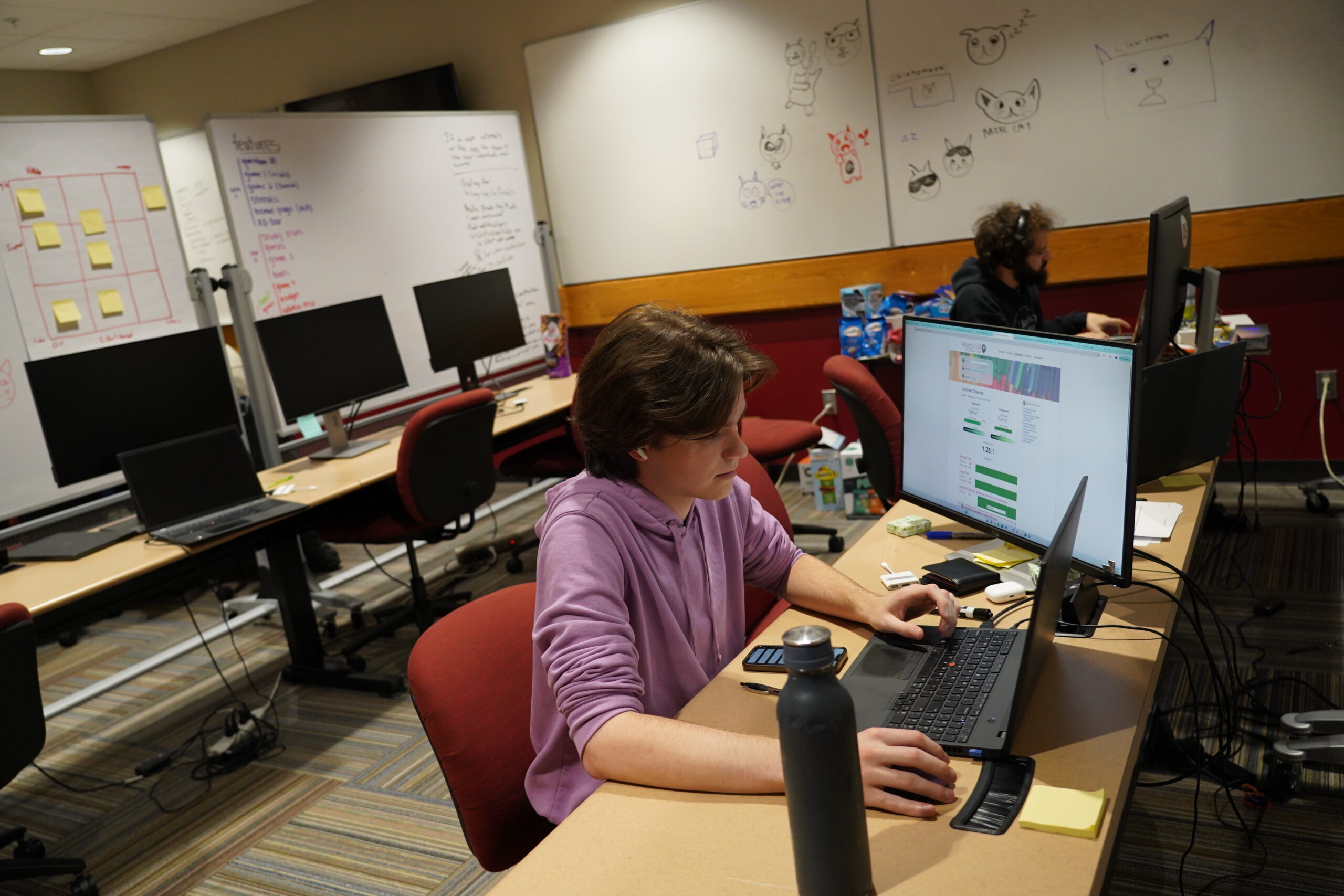
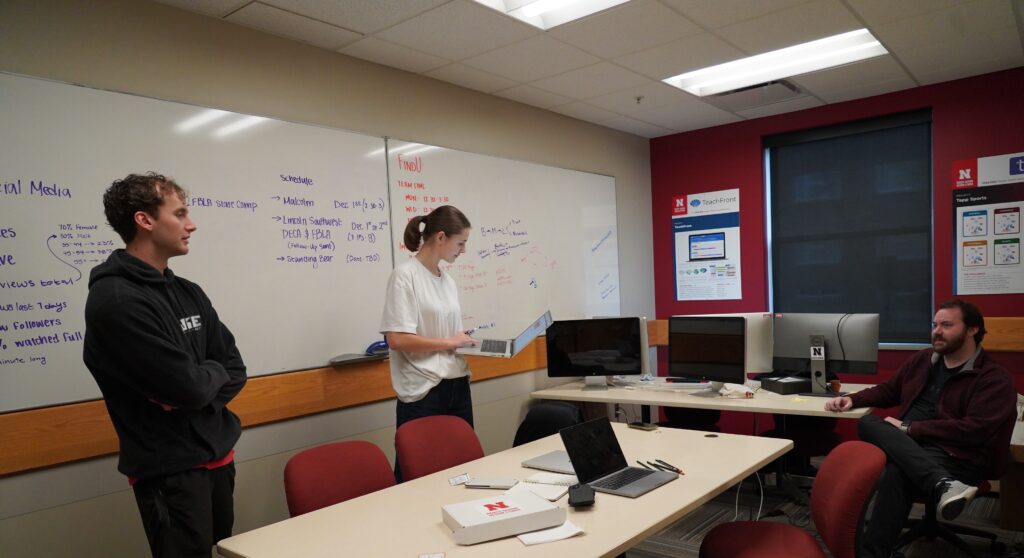
Koperski said 20 students are currently enrolled, working as teams and developing startups in Startup Studio. The capstone, a two-year course, requires students to be individual contributors their first year and team leaders their second. In the case of Startup Studio, “team leader” means the student is a founder.
Topics covered in the program include the fundamentals of investing, going to market and applying the scientific method for business and innovation strategies.
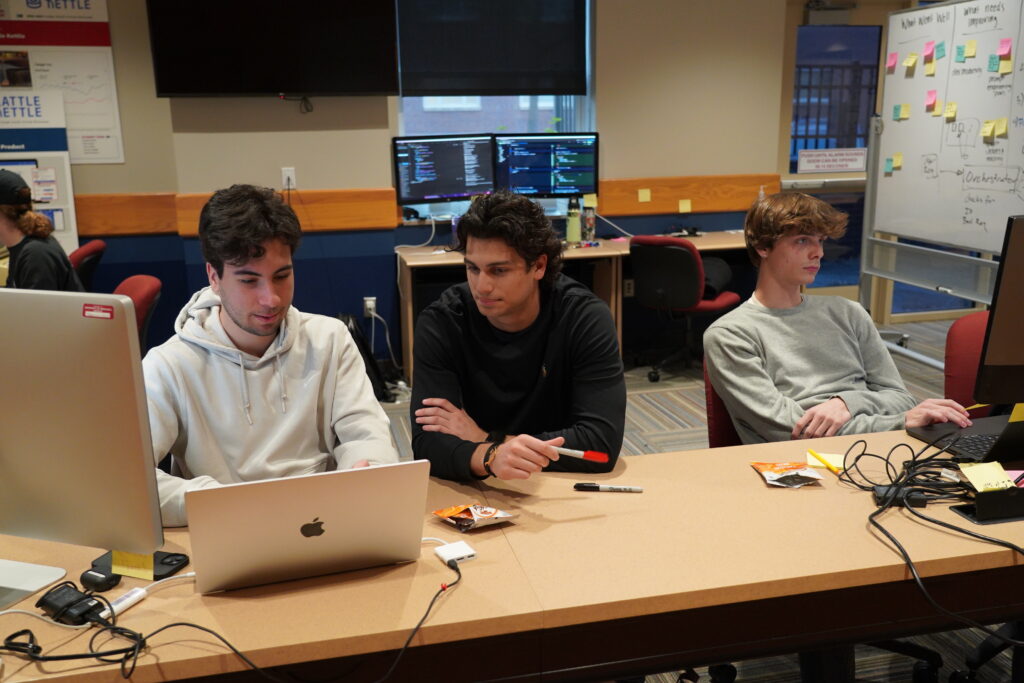
In order to get into Startup Studio, students must participate in a pitch competition hosted by Raikes School and judged by community partners and investors, such as Invest Nebraska. If students don’t place in the competition, Koperski said, they’re encouraged to carry on with their startups but will have to complete a different capstone project.
The four student-led startups of the 2025-2026 academic year:
- Creevo: AI-assistive developer tools to help game developers and lower the level of entry for making video games.
- DineU: A platform that enables third-party campus dining providers to offer delivery services through meal plans and student delivery drivers.
- FindU: A platform that helps students discover and match with schools that fit their needs and career goals. The startup won the 2024 Silicon Prairie Startup Week Pitch Competition.
- Reach: An ACT prep platform sold directly to schools to gamify and optimize studying.
DineU Co-founder Ryan Flatley said Startup Studio has given his team access to experienced advisers and work environments that encourage collaboration between other startup teams in the program. The $100,000 investment, he said, has been useful for working through the various unforeseen costs that pop up when launching a business, such as owning website domains or paying for software services. These pricetags, he said, otherwise would have been a barrier.
Creevo Co-founder Amir Tarkian said he wanted to explore the startup space because he saw value in having to take on and learn multiple responsibilities for keeping a small company afloat and scaling. By being venture-backed, he said, he and his team have gained a level of legitimacy when pursuing additional opportunities.
“I can actually go tell people we’re a real company and we’re looking for real customers and we’re looking for real connections,” Tarkian said. “It gets you in the door.”
The future of the ecosystem
Strattan said it wasn’t difficult to raise money to support the student-led startups, as co-investors in the community are excited about the program and the “next crop of entrepreneurs.”
“As a Raikes School graduate and advisory board member, I appreciate how deeply students invest in the community around them,” Hudl COO Matt Mueller said in an email to SPN. “They aren’t just sharpening technical skills — they’re using those skills to help startups grow, support Nebraska businesses, solve real challenges and bring new ideas to life.”
In recent months, Nebraska has faced funding cuts to state programs such as the Business Innovation Act and overall university research.
Koperski said the loss of Invest Nebraska or its funding would impede the success of Startup Studio and its students and be a major loss for Nebraska.
“We will do what we can — myself, the students, the faculty and staff here — to celebrate this partnership and share the impact of their program on ours,” Koperski said. “Because it’s huge.”
By providing students the necessary resources and connections to grow their ventures and explore what it means to be an entrepreneur, Koperski said, initiatives such as Invest Nebraska encourage “the best and brightest” to scale their companies here or work for local startups.
Acknowledging the lower costs of living and doing business in the Midwest, Tarkian said the fact that his team is based in Lincoln makes the idea of growing the company in Nebraska seem doable. But, he said, it’s not a guarantee that he will stay.
“You move wherever the funding is,” Tarkian said.