When building a business, founders can face unexpected and paralyzing legal questions under the constraints of a tight budget. The Creighton University School of Law recently launched its Innovation and Entrepreneurship Legal Clinic (IELC) to address these obstacles. Its goal is to provide free legal and operational guidance to local entrepreneurs while also giving students hands-on experience.
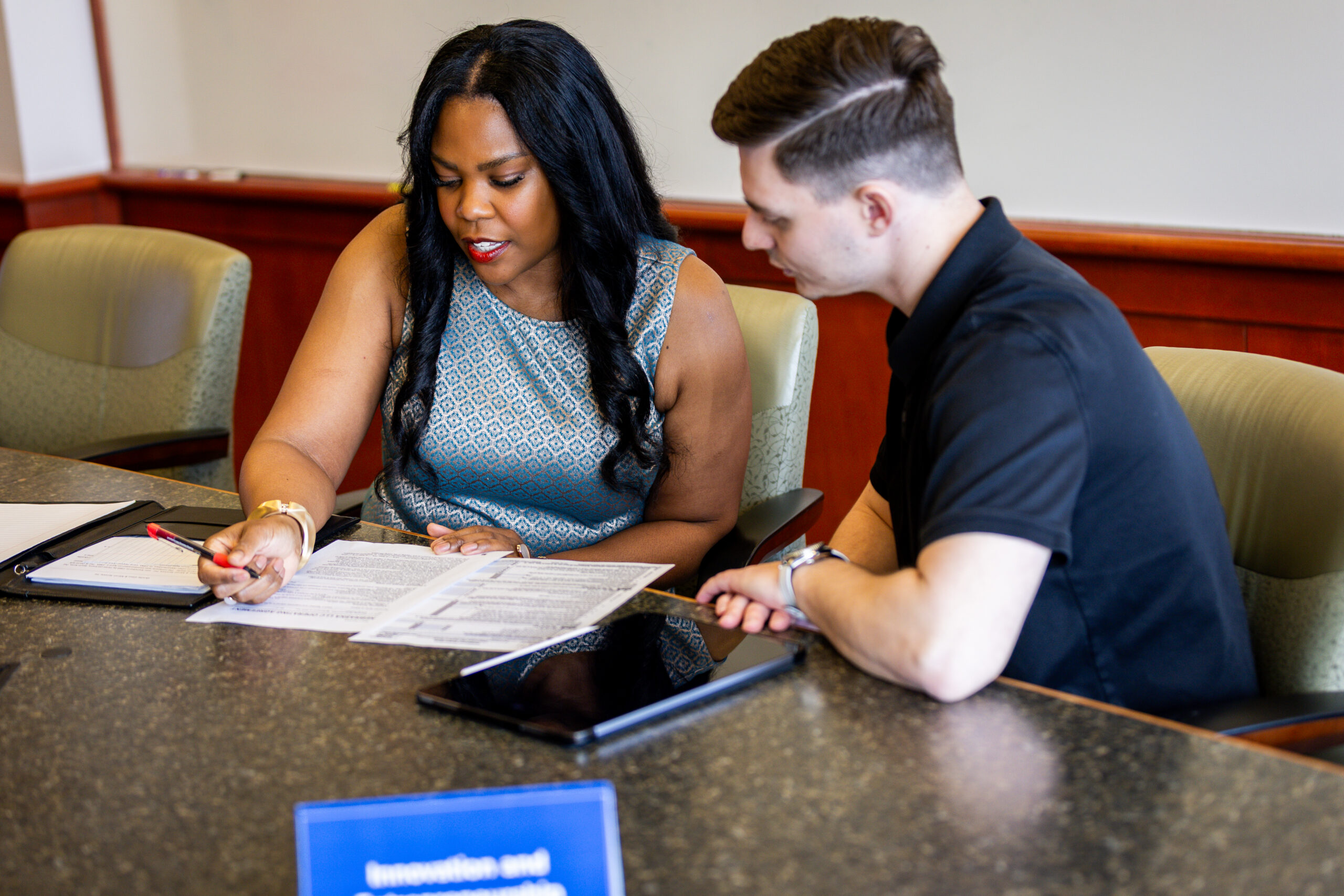
IELC leadership said the clinic pairs students with clients to meet one on one and navigate various legal topics and business requirements. This could be anything from forming an entity to drafting contracts. Attorney fees and meetings remain free through the clinic, but participants could still face standard expenses such as filing fees with government agencies.
Jessica Olsen is one of the first clients of IELC and is the founder of the Creative Life Podcast. Olsen said she sought assistance from the clinic as her podcast reached a point of growth that is unlocking new business opportunities. She became aware of IELC through her involvement in the Omaha tech community and being a Creighton doctoral student.
Olsen said she wasn’t hesitant to work with law students because she believes in their commitments to bettering the city, and she valued the structures they had in place for guaranteeing quality aid. She said she appreciated the transparency of the members of the IELC team in their own limitations and where she might need to pursue other resources for help.
“My mother was an entrepreneur, and one of the greatest takeaways that I’ve gotten, seeing her have her own small business, is that the best thing you can do is get help,” Olsen said. “There’s something about having an ecosystem that you build for yourself that helps guard you against burnout.”
IELC Co-Director Bruce Wray is a clinical assistant professor of law at Creighton and serves along with IELC Co-Director Shaun Ilahi. Wray said IELC operates as a class for students, allowing them to earn college credits while enabling them to explore career pathways outside the litigation space and into transactional law.
“They’re basically doing the work under our licenses,” Wray said. “We meet with them, we go over their work, we talk over what they found, what their plan is, what they want to do with this, how they want to handle this and then they move forward from there.”
Wray said targeted clients can range from those with ideas for a nonprofit to those with startups wanting to scale nationwide.
The initiative is funded for three years through a North and South Omaha Recovery Grant, which encourages the clinic to function as a catalyst in creating economically resilient communities in these areas and city core. Larger goals include retaining talent in Omaha and generating both businesses and generational wealth.
As the first class began in January, Wray said he, Ilahi and their three current students are collaborating to develop the IELC framework. This means working to understand community interests on top of figuring out areas in which the clinic can improve.
“I’ve joked with the students that they’re getting both sides of the entrepreneurship bubble,” Wray said, “where they’re helping entrepreneurs and they’re working with businesses, but they are themselves an entrepreneur here.”
Serving entrepreneurs across Nebraska
The Weibling Entrepreneurship Clinic at the University of Nebraska-Lincoln started in 2013. It is another resource that offers free legal advice and representation to entrepreneurs throughout the state. Under experienced supervision, law students work directly with clients and practice applicable, transferable skills in transactional law.
Weibling Entrepreneurship Clinic Director Brett Stohs said his students in the credited class serve a mix of small businesses, high-growth startups and nonprofit organizations. At the early stages of their ventures, these types of clientele usually pose more risk to established firms for not having the funds or the guarantee of success to make any commitments seem worthwhile.
“I think the reason the transactional entrepreneurship clinics like this have opened is partly because of that gap in the market,” Stohs said.
He added that founders and business owners tend to remain optimistic and focused on their ambitions. They also prioritize things such as customer discovery. They’re not thinking about possible roadblocks or legal trappings until they’re too far down the road of development.
“Most people who get involved or who decide to start something new — start a business, start a charity — they’re driven by an idea, they’re driven by an innovation, something new,” Stohs said. “They’re not driven by, ‘How do I protect myself from bad actors?’”
Malindi Gabelhouse, owner and CEO of HomeLincMatch, is a client of the Weibling Entrepreneurship Clinic. Gabelhouse said she’s thankful for the UNL students guiding her through complex considerations. Her recently launched startup seeks to connect guardians, providers and state agencies to assist individuals with intellectual disabilities find a home that matches their needs.
“This concept feels approachable and feels manageable because of them,” Gabelhouse said. “I think what stood out to me was how collaborative and empowering the whole experience has been. I’ve never felt like ‘just another client.’”
Information on how to apply for Weibling Entrepreneurship Clinic services can be found here.
Wray at Creighton said Stohs has been supportive of IELC, meeting with him and Ilahi and offering advice to get things ready for launch. With IELC now taking on clients of their own, Wray and Stohs said there are opportunities for referrals between each other’s clinics to help fulfill more entrepreneurs’ requests.
IELC leadership said they plan to leave their client intake form open year-round, evaluating applicants on a “first come, first served” basis. They also plan to coordinate efforts with the Creighton Greisch Center for Enterprise Value to support individuals leveraging both resources.
Additional free legal resources available to founders include legal office hours hosted by Baird Holm following 1 Million Cups Omaha and Lincoln, as well as BAIL Office Hours at The Commonwealth.