When Fleet Defender, the vehicle cybersecurity startup, was developing its software for transportation giant Werner Enterprises, the team had the opportunity to work out of Werner’s Omaha office. Fleet Defender CEO Terry Reinert could look over from his desk and see Werner’s cybersecurity team.
On another side was the tech team. Sitting behind him was the driver team. “Every single answer I needed was within one or two rows of where I was sitting,” Reinert said.
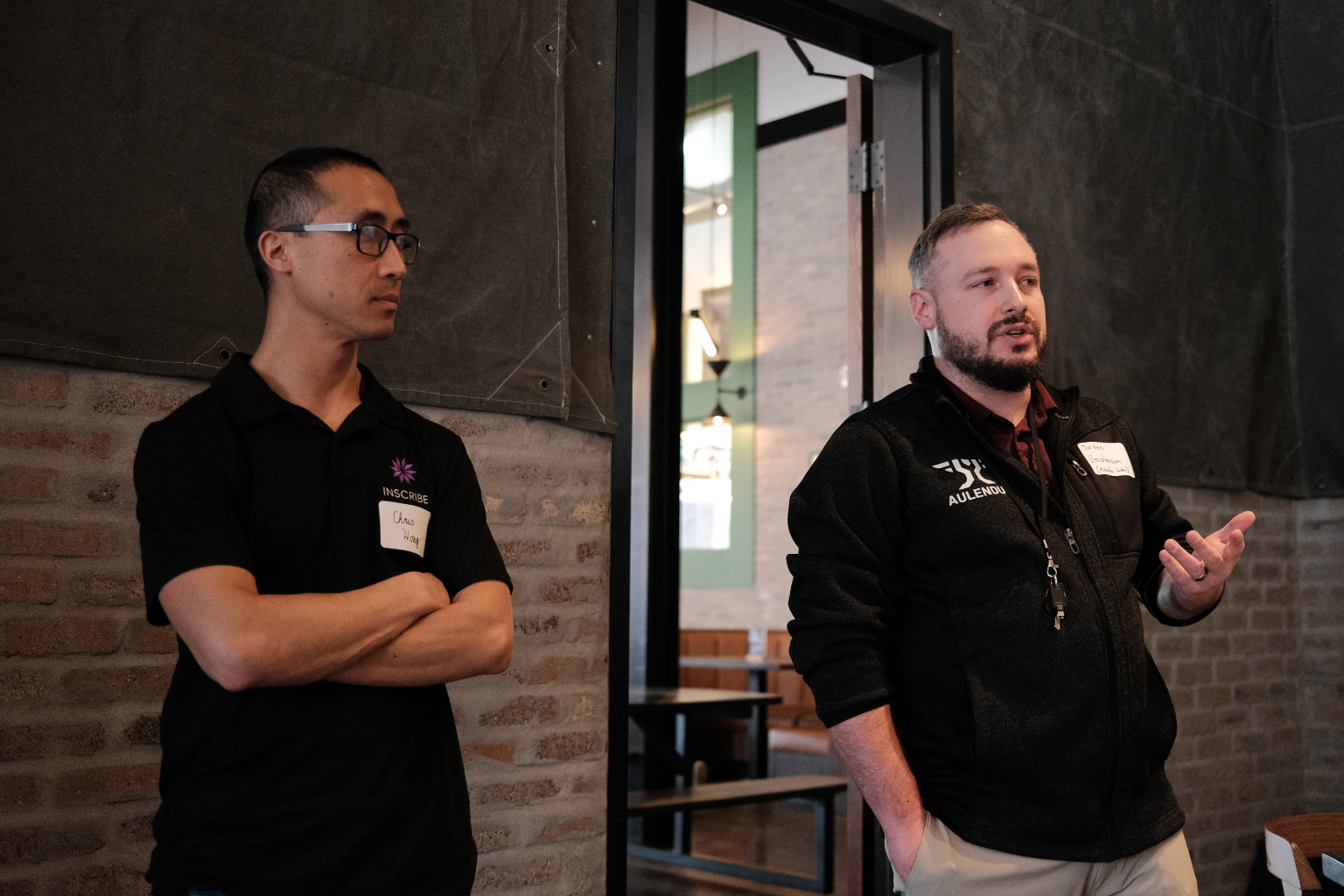
Now, two startups will have the same opportunity for support as part of the Werner Exchange, a new accelerator program jointly run by Werner and the Nebraska Startup Academy. Aulendur Labs, an Omaha-based machine learning company, and Elmeeda, a company automating fleet maintenance from Chicago, are in the inaugural cohort.
“We have the space, we have the expertise to help out in various ways, we have the passion,” said Daragh Mahon, executive vice president and chief information officer of Werner Enterprises. The accelerator “felt like something we could do at little to no impact or cost to us, and it could be of a massive help to a couple of companies.”
The accelerator does not take equity in the startups. It runs for 12 weeks and is designed for founders to work out of Werner’s offices while having access to resources from the NSA. At the end, the startups will have a virtual demo day to pitch investors.
Werner has long had an informal relationship with Nebraska startups. The company has worked with some to help develop their products. And it has participated in the NSA’s corporate pitch days, where vetted startups pitch Werner as a potential customer and investor.
The creation of a formalized accelerator has been brewing for several years. Mahon spoke with Werner CEO Derek Leathers, who was supportive of the idea, which also came up regularly during Mahon’s meetings with NSA staff.
“The whole goal here is that Werner will look at these companies and go, ‘Yep, we can see ourselves using this in three or four months,’” Mahon said.
But also, “whether we get anything out of this or not is really immaterial,” he said.” What we’re trying to do is have people go out and go, ‘You know what? We had a really good experience at Werner in Nebraska, in Omaha.’”
In October, Werner and the NSA decided to get the program rolling and officially announced the accelerator in January. Applicants were narrowed to a pool of six startups, which pitched Werner directly for the final selection.
The aim is to “take what (Werner) was already doing on kind of a one-off — building these relationships with startups that they were getting exposed to — and put some process around it,” said Alyssa Cave, the Nebraska Startup Academy’s director of entrepreneurship.
“Corporates, they have their main businesses, but it’s always nice to see partners, like a Werner, doing stuff that is more forward thinking or more proactive in this space,” she said. “We’re always happy to partner with anyone … for opportunities like this. It’s a pretty hands-on, tailored experience.”
Mahon is excited to work with founders through the accelerator. From a corporate innovation standpoint, he considers real tech innovation today to come only from startups. It’s important to work with them and help foster the next generation of technology and talent — even if it takes some pivots for the startups to land on an effective product.
“There’s been times where you bring in some startup and it doesn’t work exactly the way you want to,” Mahon said. “That’s the beauty of startups. You bring in a large, established platform company, and things don’t work well. It’s really hard to get the right people to make it work. Whereas with startups, their teams are going to work around the clock to make it work for you.”
In working with Werner, startups can also learn how best to approach corporate clients. Sales cycles can be slower, and startups need to address a longer list of prerequisites around security and bandwidth.
“You have to recognize that when you come to a Werner, your throughputs have got to be measured in thousands of transactions per second, not thousands per minute or hour,” Mahon said.
Having Werner’s support helped Fleet Defender survive as a young startup and gain more business across the country. As a result, Reinert hopes other startups that work with Werner take full advantage of their resources.
“If Werner is going to give you a desk in their office to work at for a few months — take it, be there every single day,” he said. “Talk to every single person you meet … they’re a massive organization, they have someone that can help you. So don’t be afraid, don’t be timid, don’t be shy.”
Lev Gringauz is a Report for America corps member who writes about corporate innovation and workforce development for Silicon Prairie News.