
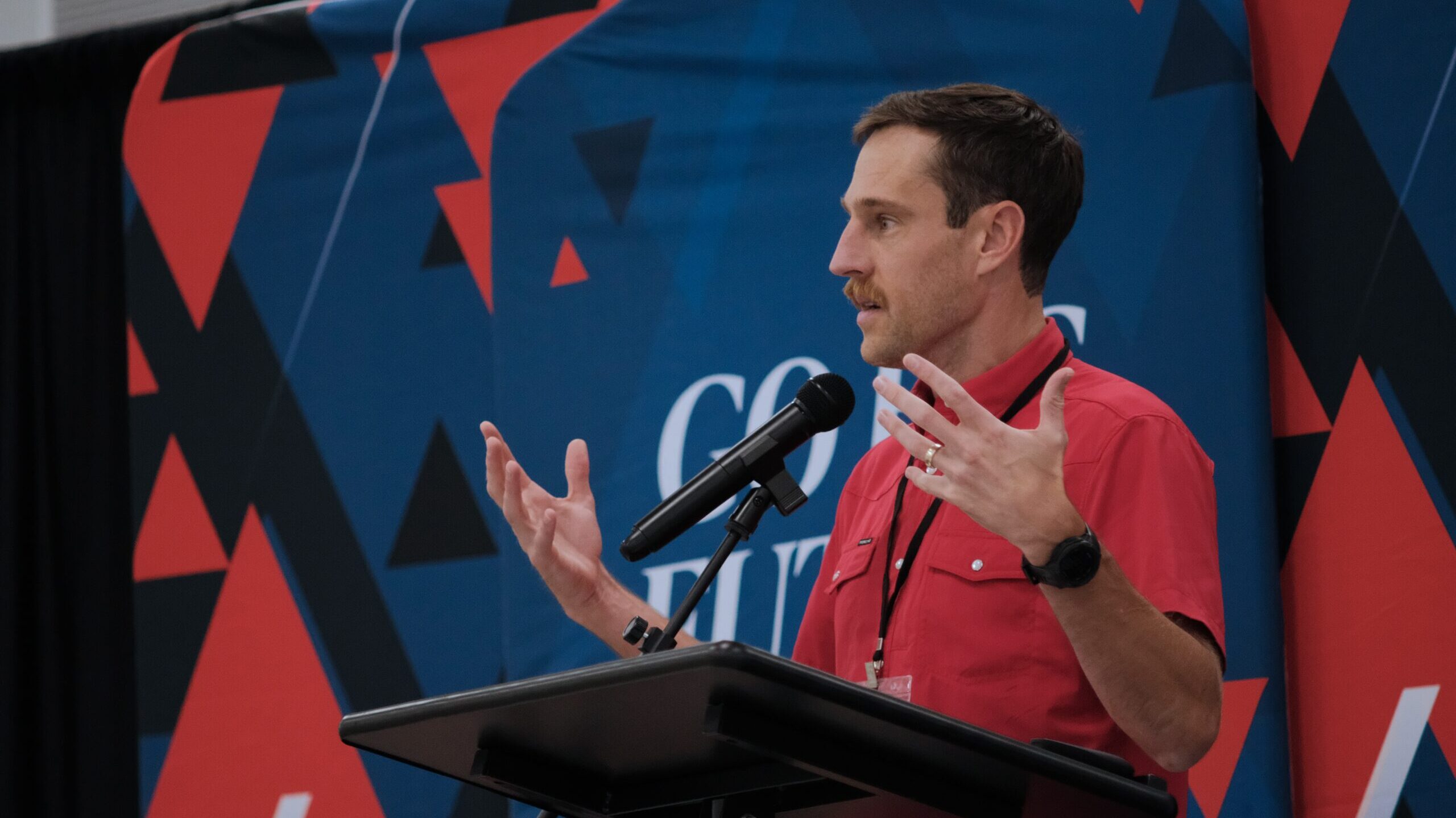
Ben Williamson, the co-founder and partner at agtech venture capital firm Grit Road Partners, is tired of Nebraskans asking what other innovation ecosystems have that Nebraska doesn’t.
“We ask, ‘How can we be like Silicon Valley or Cambridge, Massachusetts, or even Boulder or Madison or Miami?’” he said. “Guess what: We don’t want to be like those places. And I would argue we are asking the exact wrong question. A better question is, ‘What does Nebraska already have and what would happen if we connected it more efficiently?’”
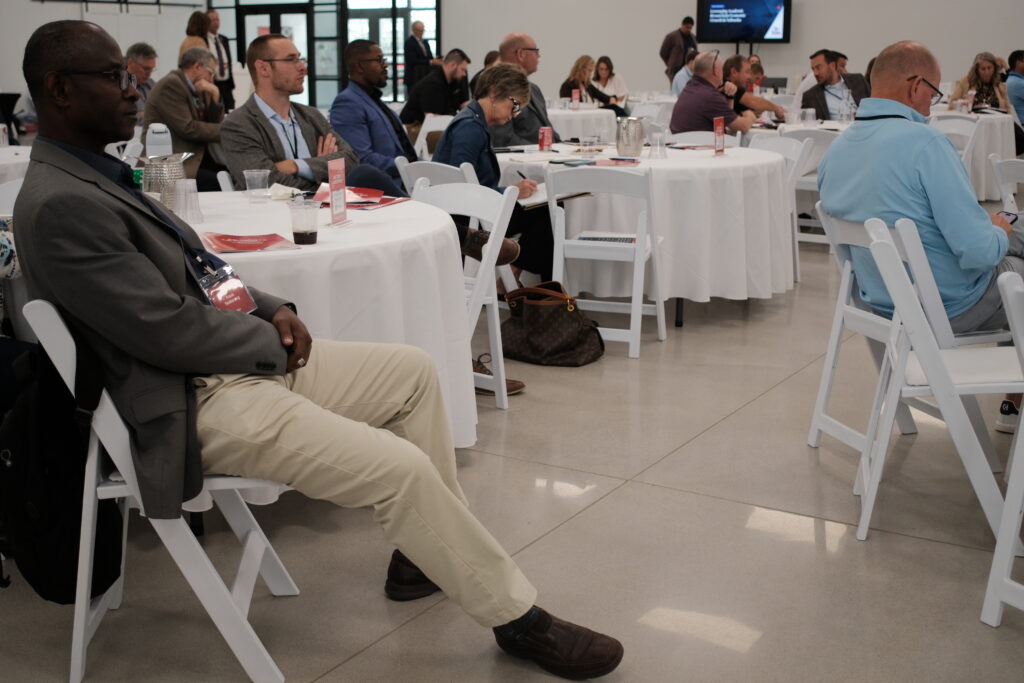
To Williamson, one answer is coming from the state’s rapidly growing agtech ecosystem. Speaking at the Nebraska Chamber Foundation’s “Ag Tech & Beyond” event on Sept. 24, he made the argument that agtech is a blueprint for how Nebraska can be a global center for innovation across industries.
But the stakes aren’t just about innovation or startups. “It’s about giving Nebraska’s people the best reason to build their careers, their companies, and their lives in the state,” Williamson said.
Young companies create most new jobs. As a result, they also help retain more talent locally — which can stem Nebraska’s concern about brain drain — bring more outside investment and create economic opportunity for residents.
The agtech example
Williamson recalled how, in 2019, there were maybe three agriculture startups in Nebraska — a far cry from a robust agtech ecosystem. That made little sense to him and his then-employer Invest Nebraska, the state-affiliated venture capital nonprofit.
Nebraska has the farmers, the corporations, the research universities, a variety of players and experts up and down the agriculture pipeline. But having the pieces didn’t automatically mean they worked together.
“Despite what some economic developers might think, proximity is not the same thing as connectivity,” Williamson said.
So Invest Nebraska took a bet and, together with the University of Nebraska-Lincoln and the Nebraska Innovation Campus, established The Combine, an agtech startup incubator and accelerator.
Then in 2023, Williamson launched Grit Road Partners with co-founder Mike Jung to invest in agtech startups while connecting them with capital and helpful relationships.
Both swings have been a success, with a booming Nebraska agtech scene now receiving national awards and attention.
But Williamson is quick to say that simply starting new initiatives is not a solution to a tepid ecosystem.
“Another program, another fund, another building, another conference, another committee,” he said. “These things can be valuable, but … the more important questions are, ‘Are we building trust? Are we connecting people that would not otherwise meet? Are we helping entrepreneurs get access to research, customers, talent, and capital?’”
That’s what The Combine and Grit Road are trying to do, including by mobilizing the many agriculture stakeholders to drive agtech innovation.
Getting everyone to work together requires “a broad enough effort that different stakeholders can see their own interests reflected in that bigger goal,” Williamson said.
“We, sort of unknowingly, created a big audacious cause in 2021 when we put in our pitch deck that we were gonna build the global hub of agtech,” he said. “Turns out we think that that can provide the cause that the state so desperately needs.”
A shared commitment
No one organization should be in charge of an innovation ecosystem, nor do all stakeholders need to be involved in the same way or do the same things.
But everyone should be involved in some way, and be ready to do so for years.
“This is a long-term commitment,” Williamson said. “The unfortunate reality is building an ecosystem is measured in decades, not funding, agriculture or political cycles. Luckily, we’re already six years into this agtech effort, and I can genuinely say we have 10x the ecosystem in just six years.”
There’s still a long way to go to be the global center of agtech. But if Nebraska can make this effort work, as it has so far, it can do so with any industry. There may be different organizations or ways to approach those other ecosystems, but the basic principles stay the same.
“Organizing stakeholders around a shared cause. Building trust across institutional boundaries,” Williamson said. “Connecting entrepreneurs to research, to customers, and to capital. Creating better pathways from discovery to commercialization. Encouraging corporations to engage with startups.”
Nebraska just needs to focus and use what it has, he said.
“The ultimate test is relatively simple. Does our ecosystem consistently help talented people turn important ideas, solving real problems, into enduring companies?” Williamson said. “If we do, we’re on the right track. If we don’t, then frankly, we’ve squandered the assets that we already have in place.”



Leave a Reply