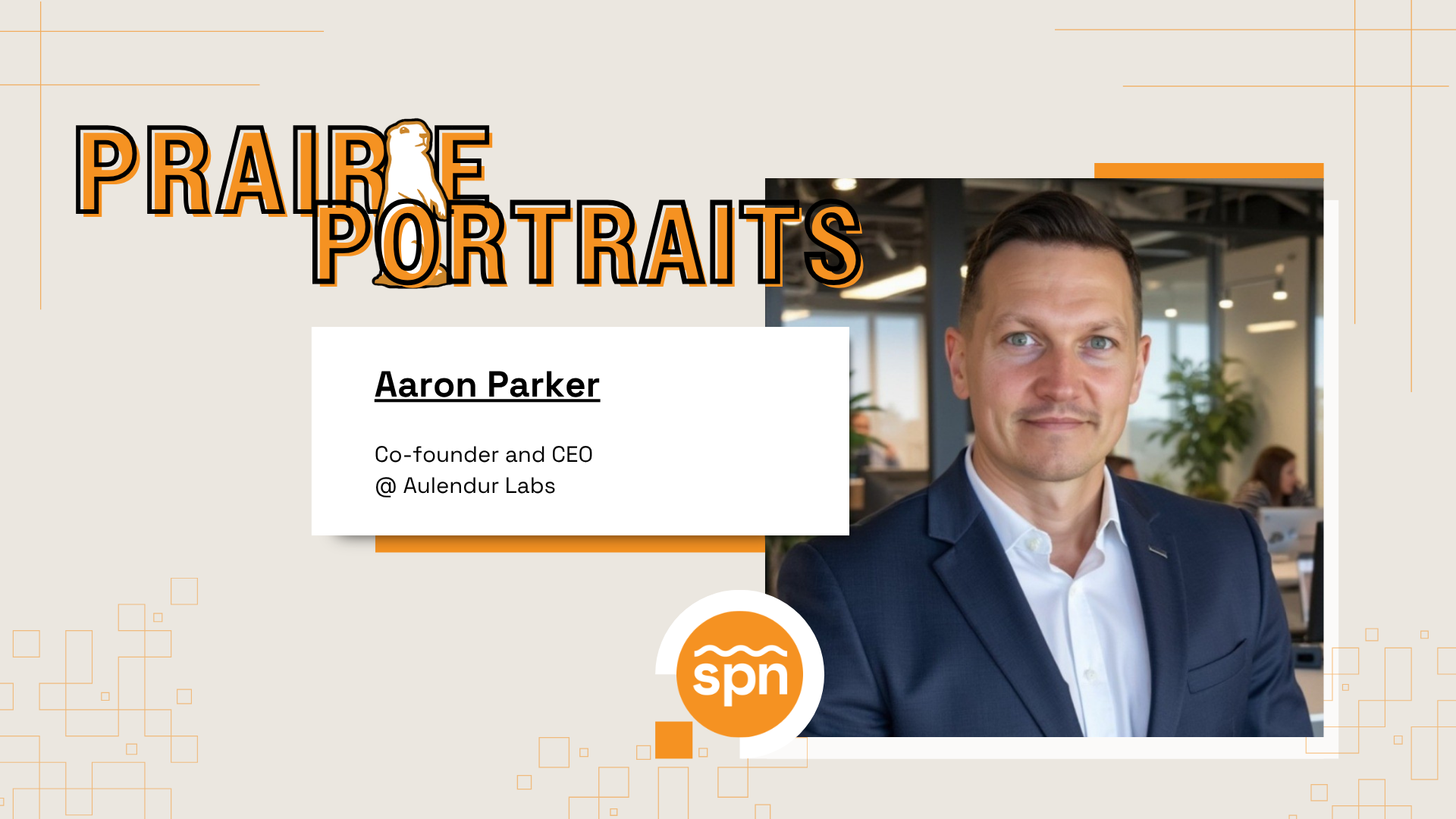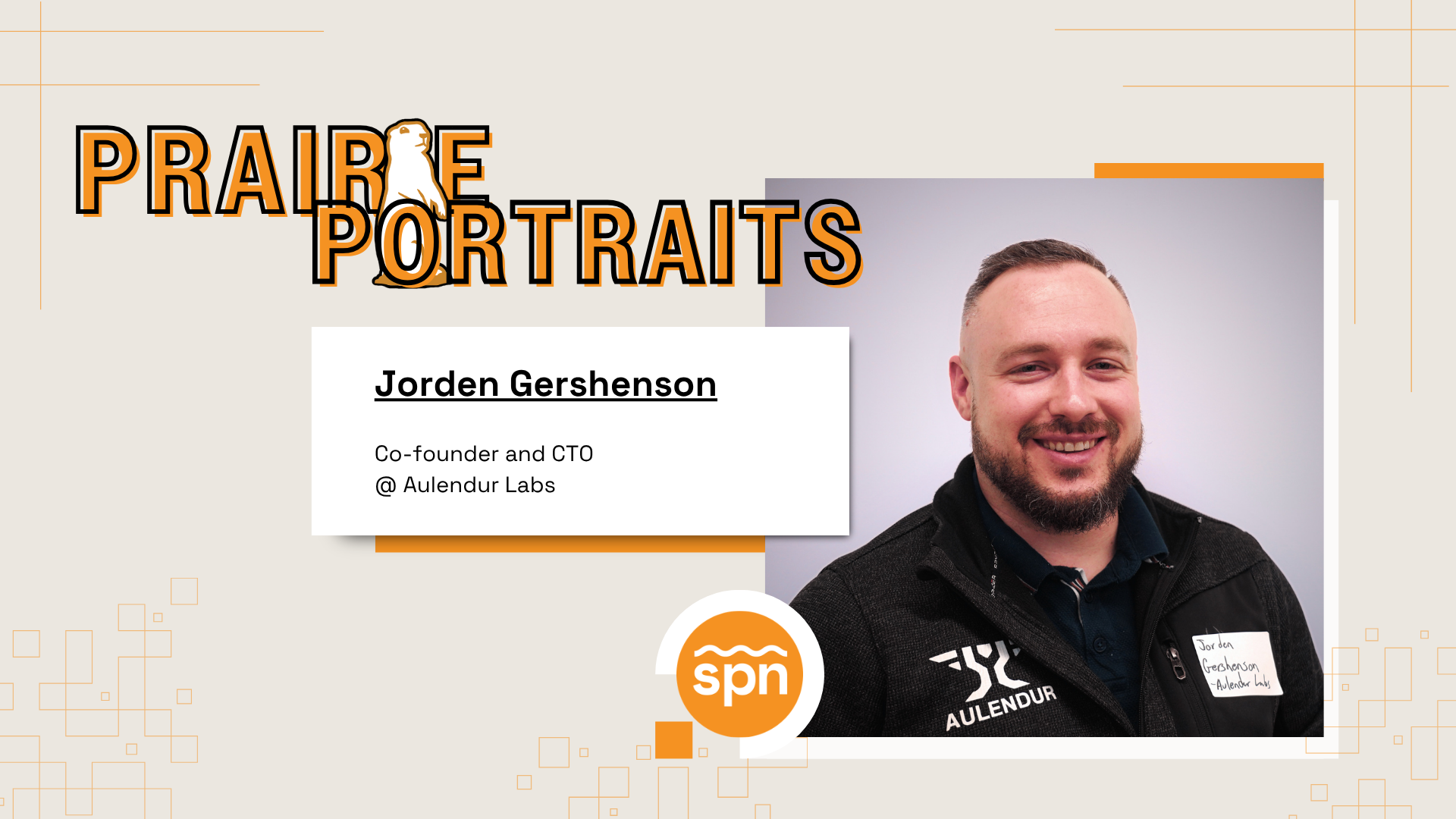
Meet Jorden Gershenson, Co-founder and CTO @ Aulendur Labs
Aulendur Labs is a tech company that uses artificial intelligence and machine learning to combine and analyze data from connected systems, such as markets, infrastructure and weather. The goal is to make calculated predictions.
The company was a member of the Techstars Founder Catalyst Program spring cohort for Greater Omaha, as well as the inaugural Werner Exchange accelerator program. Gershenson has also taken on efforts to form connections between the startup and defense ecosystems in Omaha.
What inspired you to become an entrepreneur or support other entrepreneurs?
Part of me always knew this was where I was headed. I’ve always been drawn to doing something new and exciting. As a kid, I thought that meant being a fighter pilot or an astronaut, so I joined the Air Force and found those things weren’t quite what I’d imagined.
There’s a saying that we’re the middle children of history, born too late to explore the earth and too early to explore the stars. I think that misses what’s exciting about the time we’re living in. The frontier today isn’t geographic — it’s the opportunity to build incredible things.
I mean, AI research has been a complete paradigm shift for computer science. I think most people don’t realize that AI researchers are building artificial minds that accomplish amazing things, then studying those minds because we don’t really understand why they work. We live in a time of incredible progress and perhaps one of the most important moments in history.
What would you build if you could go back in time to the invention of the transistor? It’s just too exciting not to take our shot. I don’t think I could have taken another minute of sitting on the sidelines while others built the innovations that will define the next generation of technology.
What advice would you give yourself if you could go back in time to when you were just starting out?
We haven’t been doing this very long, so take this with a grain of salt. But I’d say there’s often no way to know what the right answer is. You just have to go do it.
My co-founder and I spent a lot of time trying to find the perfect way to pitch this to investors and customers. It turns out there are better and worse answers, but no resource and no guide was going to tell us which was which.
You have to trial-and-error your way through. It’s painful and disappointing at times, but it’s the only way.
How do you stay motivated when things feel overwhelming — or stagnant?
I try to remember how fortunate I am to be doing this at all. There’s a kind of masochism in founder culture, this “Look how hard it is. Isn’t it impressive that I can hack it?” attitude that downplays how lucky founders actually are. We get to support ourselves while exploring something brand new, on a small team, working on things we care about, choosing our own path.
I live in a time and place where there’s technology worth building and capital willing to back the people building it. When I zoom out and remember that, I think: “This is really cool, and I’m glad I took the leap.”
It might not work out, and that’s OK. At least I did it, and at least I was in a position to.
What is the biggest challenge you’ve overcome and how did you overcome it?
Finding our voice. What draws me to this is building something at the cusp of what humanity is capable of, which is closer to research than to a typical startup. That’s why we’re focused on deep tech.
But we’re in an awkward in-between. We’re not doing fundamental research, so NSF grants are a stretch. And originally, we framed ourselves more like DeepMind in their early days: Prove the technology works. Customers come later.
The challenge has been reframing that. If you want investors to join you, you have to show them you’re willing to develop iteratively, to bring pieces of the technology to market even if it’s not the full vision yet — so you can demonstrate traction and prove people actually want this.
A big shout-out to the folks at Nebraska Startup Academy and MOVE who have really taken us under their wing and helped us sharpen that message.
How can the Nebraska community support you?
We’re fortunate here. Between Tenaska, Werner, OPPD and other large organizations, Omaha has world-class enterprise customers right down the road. Being able to drive to Werner for our pilot instead of flying to some far-flung city is a real advantage, and VCs outside the Midwest are starting to see that too.
So the ask is introductions. Keep us in mind when you think of the large organizations and critical infrastructure we have here. We’ve had to work backwards from the usual model. Instead of starting with a problem, we started with a new technology: a forecasting capability.
The question we’d love people to sit with is this: If you could ask a question about the near future and get an answer with 90% confidence, what would you ask, and how would you use it to make money or improve your business?
If anyone comes to mind, send them our way. The community has been incredibly supportive so far, and we’re grateful for it.