
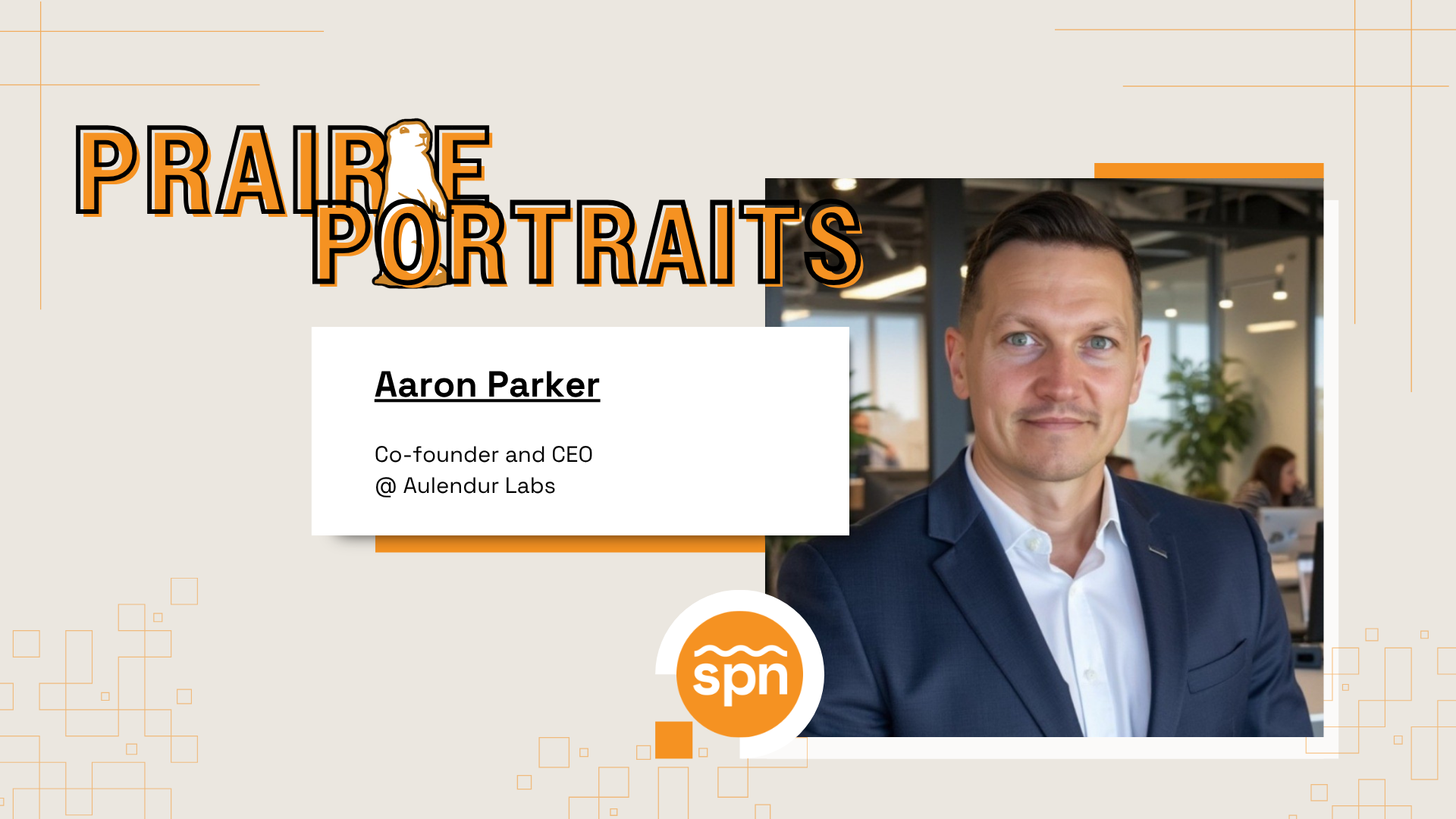
Meet Aaron Parker, Co-founder and CEO @ Aulendur Labs
Aulendur Labs is a tech company that uses artificial intelligence and machine learning to combine and analyze data from connected systems, such as markets, infrastructure, logistics and weather. The goal is to make calculated predictions.
The company was a member of the Techstars Founder Catalyst Program spring cohort for Greater Omaha, as well as the inaugural Werner Exchange accelerator program.
What inspired you to become an entrepreneur or support other entrepreneurs?
A lot of it comes down to wanting to chart my own path. At times, I have been comfortable just riding along on a track someone else laid down for me. But I love building things, the kind of building where you lose a whole afternoon because the problem in front of you is all- consuming. Pair that with a streak in me that is very risk-tolerant.
I am thoughtful by nature and think things through, but I am also at peace with taking big swings. When I am old and look back, I do not want a tidy resume, but I want to feel like I went on real adventures and bet on myself when it counted. Starting Aulendur was one of those bets.
What advice would you give yourself if you could go back in time to when you were just starting out?
First, read more, ask more, listen more and learn that your ego is not your friend. Even if you’re actually very brilliant (which you may be), you don’t understand the depths of how much you don’t know.
At some point, you are probably willingly blind to how much you could grow if you seriously chose to. The world is huge, complex, uncertain and your life will transform if you read more, ask more, listen more and learn that your ego is not your friend.
Second, even when it’s your time to speak, say less (which I still struggle with). When I started, I thought being clear meant explaining everything. But what I have learned is that the more you learn to shore up your communication with as much clarity and succinctness as you can muster, the more people will tune in.
Practicing your writing will help, along with my first piece of travel-back-in-time advice.
Third, build your network on purpose and not as a series of transactions. I was not always good at that.
The relationships that matter are the genuine ones, where you make yourself useful long before you ever need anything, so that giving comes first and asking, when it eventually comes, is just part of a real relationship — instead of a cold favor. I wish I had started both of those earlier.
How do you stay motivated when things feel overwhelming — or stagnant?
One, I always carve out time to actually build because making things is what most of us got into this for in the first place. Demis Hassabis runs one of the best AI labs on the planet and still finds time to build. If he can protect that, so can I.
Two, you are going to hear “No” far more often than “Yes.” That is closer to a universal law of statistics than a verdict or judgment on you and how worthy you are. Once that sinks in, the rejections stop landing so hard.
Three, do not let your growing tolerance for hearing “No” turn into ignoring feedback. I take the no’s and the criticism and look for patterns. Ignore the one-offs, find the themes that keep coming up and dig for the root cause.
When you actually fix the things that repeat, the weaknesses that were quietly holding you back start to fall away and your next attempt goes better.
What is the biggest challenge you’ve overcome and how did you overcome it?
The honest one for me is internal, and it’s simply imposter syndrome. I can walk into a room looking confident, but for a long time I carried an insecurity that the more experienced people across the table could see right through me. That kind of self-doubt is sneaky, and it shows up as hesitation, over-explaining and not quite backing your own judgment when it matters most.
What helped was not a pep talk but rather reps of ignoring that feeling and just putting myself out there (it does help to be prepared, by the way) and the proof afterward when everyone just kind of nods their heads and goes, “OK, sounds good.”
The more I put my judgment on the line and watched it hold up, the more I learned to trust it, and the gap between how I felt on the inside and how I carried myself started to close.
How can the Nebraska community support you?
Start by taking a look at what we are building. Spend a few minutes at WeaveCast or our website and see what we are after.
If it sparks something, for you or for someone you know, reach out and connect. That could be a general inquiry, a warm introduction to investors or other companies, Midwest talent or anyone working in the atmospheric, logistics or defense space.

Leave a Reply