
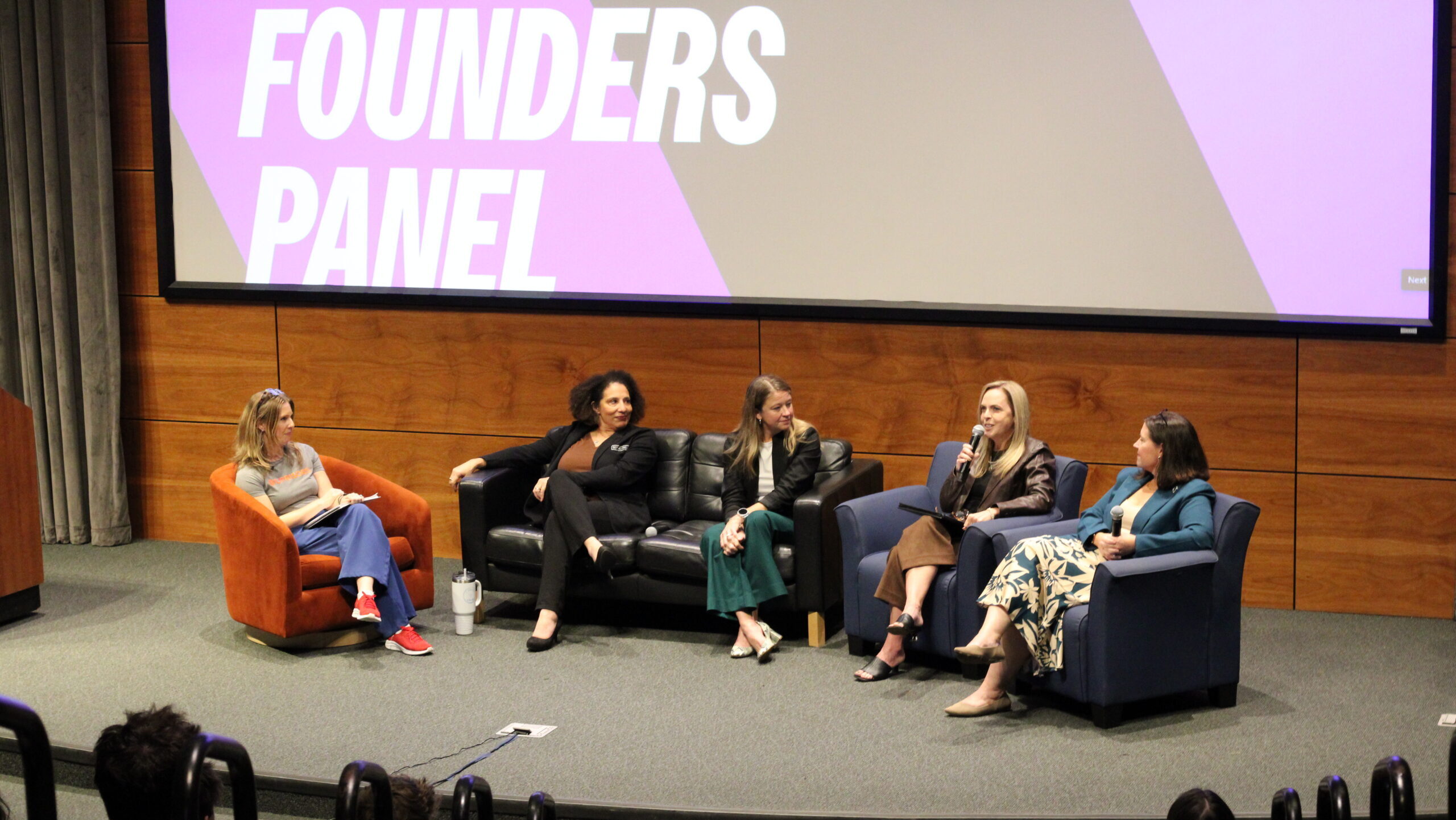
Creighton University’s Heider College of Business was once again the home of the Hustle Conference, an annual event aimed at startup founders, early entrepreneurs, students, investors and community stakeholders. Attendees gathered on Sept. 30 to hear from local startups and industry leaders.
The conference launched in 2024, under the leadership of co-founders Eric Gautschi and Curt Drew, with the goal of bringing innovators and creatives in the same room in Omaha. This year brought together local builders, as well as leadership behind prominent platforms and brands Shazam, GitHub and Liquid Death.
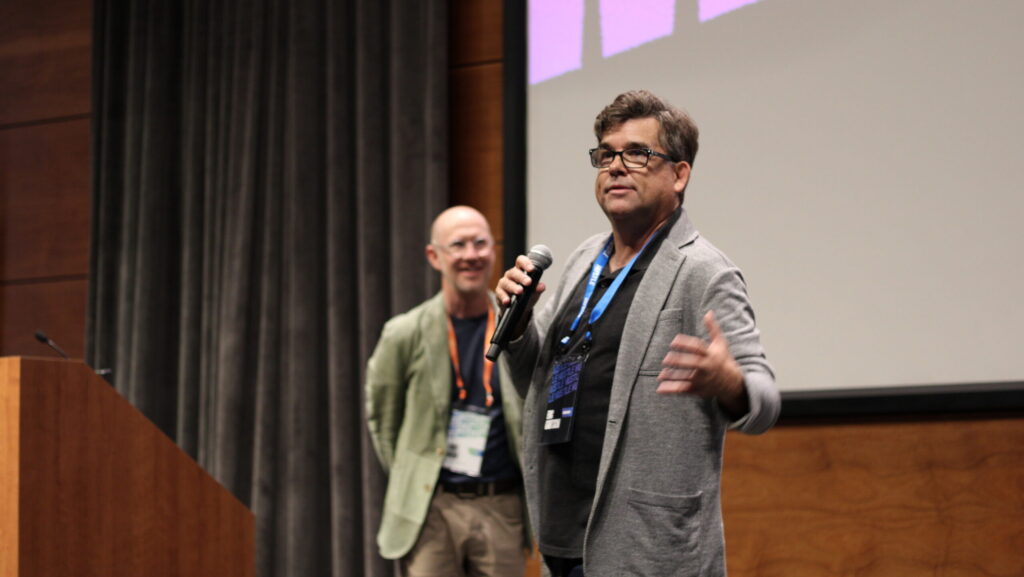
Local resources and stakeholders at the event included Proven Ventures and Omaha 100. Omaha 100 acquired SPN earlier this summer.
Five takeaways from the event:
1. Build from truths and evidence.
Shazam Founder Chris Barton began the conference by encouraging attendees to be defiant: challenge assumptions about how things work and be ready to adapt to new problems and barriers at every stage of development.
A core starting place for building a startup, Barton said, was understanding the “basic truths” around the problem a founder wishes to solve. In the case of Shazam, an app able to identify songs, this was that every phone has a microphone and that every song is a sound wave.
From there, Barton said he turned to experts and learned from other tech companies, such as Google, on how to develop technology and infrastructure to make his ideas into reality. He said the solution would evolve to meet customer needs and behavior.
Barton encouraged founders to remove possible feelings of friction that could confuse or get in the way of a customer using their solution. Customers don’t automatically understand the app or platform the same way founders and developers do: Where could a startup remove another drop-down menu or click to perform a desired task?
2. Use but go beyond what AI provides you.
A common thread throughout the day was the influence of artificial intelligence in entrepreneurial spaces. Speakers like Bill Udell of Don’t Panic Labs and Jonathan Tvrdik of WaveCX shared questions and concerns about AI. These included how the technology is dismantling necessary customer discovery processes, providing answers with misleading confidence and forcing students to question their place in the job market upon graduating college.
However, the expressed benefits of increased work capacity, cheaper programming options and quick access to data to fill knowledge gaps made the technology impossible to ignore for scaling quickly and staying competitive.
“I’m on the battlefield, and I’m on a horse,” Tvrdik said. “And there’s tanks coming over the hill. Like, I got to get a tank, right? I just have to. And so do you.”
Zach Holman of GitHub, with his background as a serial entrepreneur, software engineer and investor, noted his own belief that AI has unlocked the ability for founders to not need in-depth expertise to scale a company anymore. Still, as AI can make products and pitch decks look more professional and clean, he said founders’ use of the same tools makes their individual startups appear the same.
Holman encouraged founders “to go the extra mile” and showcase what distinguishes them from the competition.
“I’m not just asking a magic box to try to make a page or something,” Holman said. “For the love of God, do something different because everybody’s really doing the same stuff right now.”
3. Tap into human experiences and nature.
As technology and social media platforms have enabled the rise of extensive content creation and long lists of apps on app stores, the ability to stand out from the crowd and capture a user’s attention is more important than ever.
“In this era where anybody can build anything, yes, evidence is a huge piece of it, but so is taste,” Tvrdik said.
Founders throughout the day shared how they have tapped into the perspectives of their customers and end users. For example, Alpaca Founder Karen Borchert mentioned how she would chat directly with teachers in their classrooms, and Superb Founder Molly O’Neil said she used founder-led storytelling to showcase her own background in senior care.
The marketing team behind Liquid Death and its beverage products similarly expressed how businesses were not competing against just commercials anymore but entertainment in general. To be relevant, companies must understand what audiences want.
In the case of Liquid Death, customers don’t want ads. They want to be entertained, and they want to be a part of cultural trends — such as being consciousness about their health and the environment. To get a laugh, Liquid Death said they turned to the expertise of comedians.
4. Forming a team requires believing in yourself and trusting others.
Holman said AI has unlocked the ability for founders to launch companies with even smaller teams than ever before. While AI can lift heavy workloads, there was still a shared message among speakers about the need for humans to make decisions. Founders need to trust themselves and the real-world evidence they’ve gathered to pivot when necessary.
During a founder panel, panelists shared a common experience of feeling pressured to have all the answers and to join every decision and meeting due to their leadership roles. However, they also said they each came to a common understanding to trust their teams and ask for help when needed.
“Don’t be the smartest person in the room,” AeQuitas Invest Founder Molly Huyck said. “Hire people that know more than you and get out of their way.”
5. Find a sense of community.
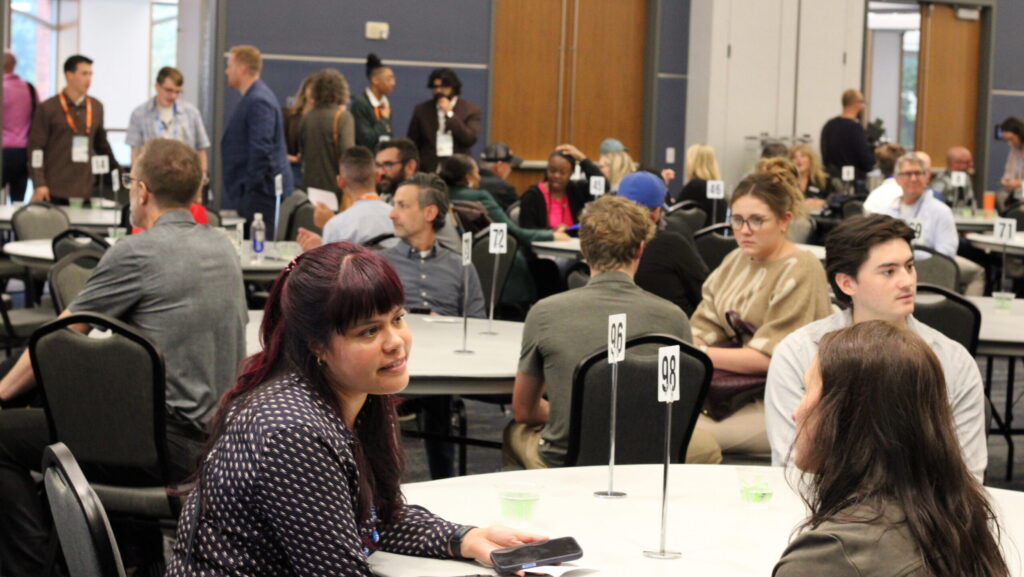
Beyond being a day of learning and exchanging insights, the Hustle Conference was also meant to be a day for attendees to build their professional networks and meet with fellow entrepreneurs and community stakeholders in Nebraska.
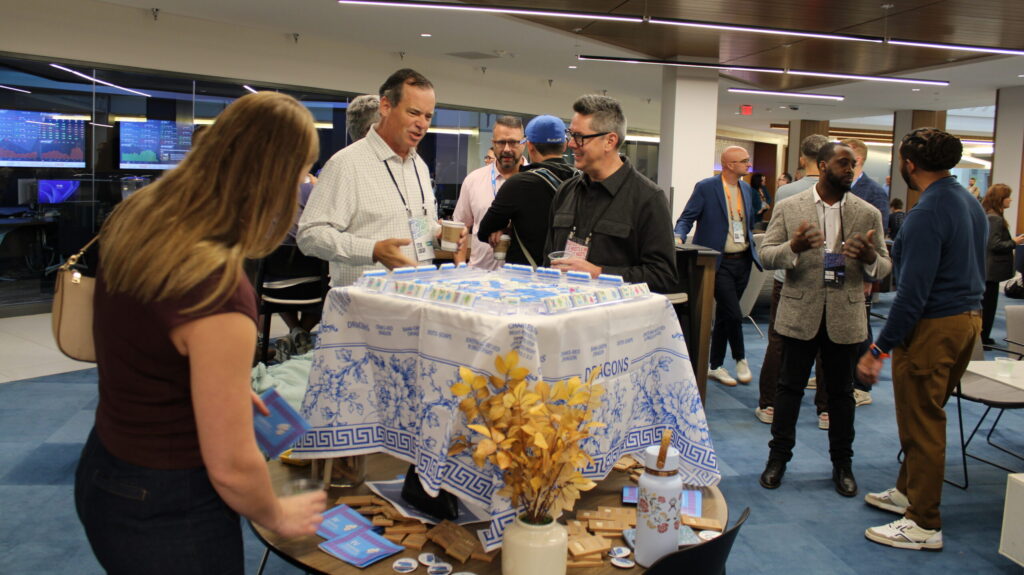
Olatunji Ajani, executive director of 1 Million Cups and Kauffman FastTrac, spoke on how community meetups help founders feel more supported and less alone in their entrepreneurial journeys.
“After interacting and working with many different leaders that are trying to support entrepreneurship globally, there is one common thing that every entrepreneur needs,” Ajani said. “And that is a space where there are other people that are crazy like you. You want to be in a space where people get you.”
You can learn about some ongoing meetups and events around the Nebraska startup ecosystem here.


Leave a Reply