
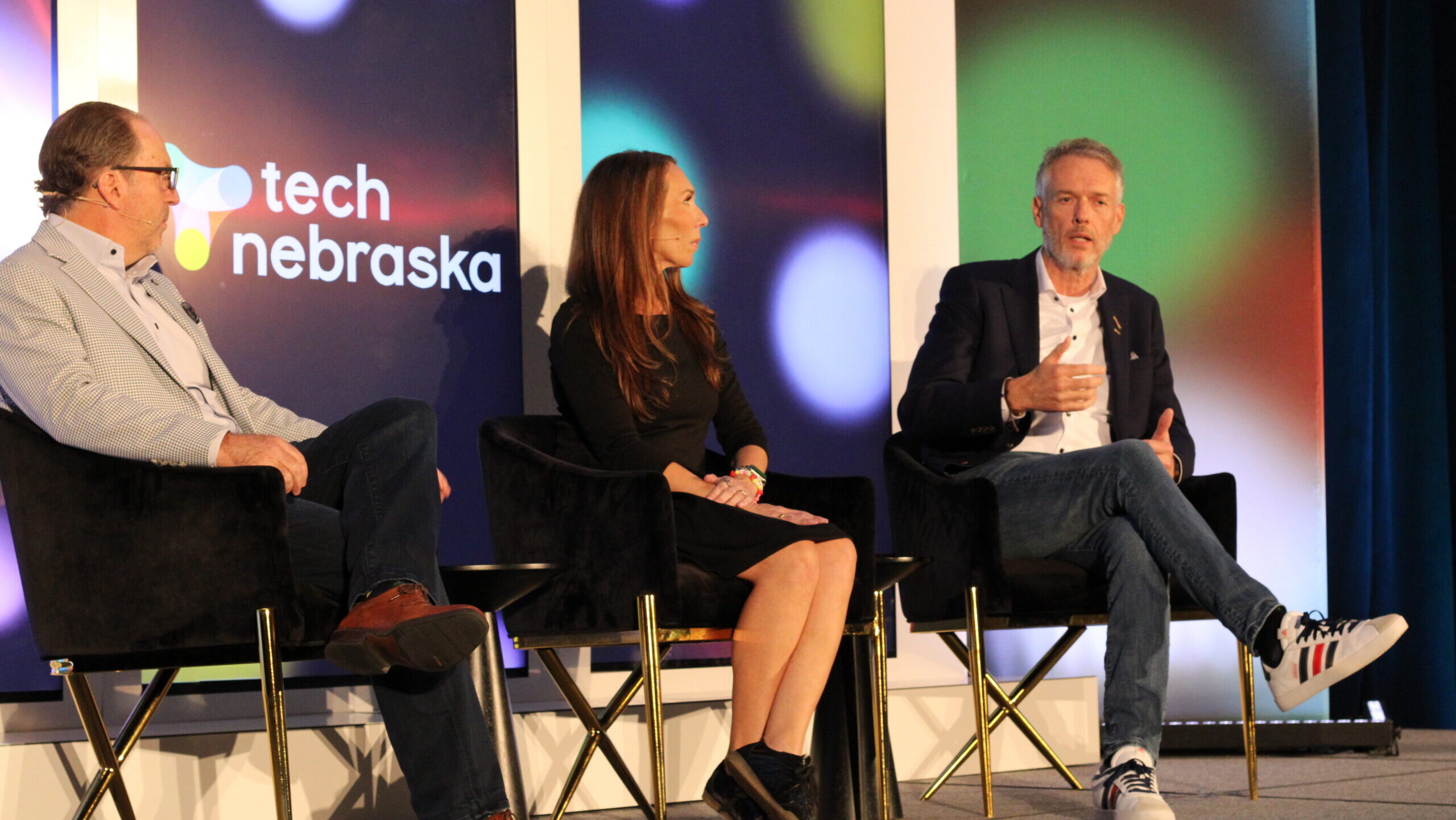
The CHI Health Center was a hub for discussion and networking on Oct. 21, bringing in hundreds of attendees from across Nebraska’s tech ecosystem for the 2026 Tech Nebraska Summit. The event was a chance for individuals to think about their futures and the future of the state as a whole.
Tech Nebraska Executive Director Emily Allen said over 500 people were in attendance, representing over 160 organizations. She added that over half of these organizations were Nebraska-based businesses.
Kiewit Vice President and Chief Information Officer Chris Dill joined Allen on stage during the opening remarks. He serves as the board chair of Tech Nebraska.
Dill said he saw three priorities in the success of Nebraska’s tech ecosystem:
- Building and attracting a trained workforce ready for the impacts of artificial intelligence
- Improving physical infrastructure in the state, such as broadband internet access
- Creating a business-friendly and startup-friendly environment that invites corporations and founders to grow in the state
This marked the first Tech Nebraska Summit since the organization separated from the Nebraska Chamber of Commerce and Industry earlier this year.
Dill said the Nebraska Chamber of Commerce and Industry provided Tech Nebraska with the necessary structure and connections to get to where it is today, but he said it was time to be independent.
“We need to be able to say what’s on the minds of our members and not have to run that through any filters, and our relationship with the Chamber made it so that we did have to align our perspectives with the Chamber broadly,” Dill said.
“And sometimes what is best for industry broadly in the state may not be just exactly what’s on the minds of our technology professionals and the people in our ecosystem,” he continued.
The event consisted of breakout sessions and panels centered on entrepreneurship and adopting AI, as well as keynote presentations on strategies for implementing both government and business policies.
Five takeaways from the 2026 Tech Nebraska Summit:
1. AI can be useful. Have a plan.
At this point in the development of AI, speakers shared a common message that the advantages of the technology were too great to not use. However, the purpose, infrastructure and messaging around AI use must be unified at all levels of an organization to reap the benefits.
No key metrics or a definable return on investment make the costs of integrating AI difficult to defend.
“Sometimes it needs to be a little bit of a shift, and sometimes you do need a complete overhaul,” said Michelle Greene, executive vice president and chief information officer at Cardinal Health. “But until you understand that and have full alignment with your business, much of this could fail.”
As the demand for AI skills rise, Greene said employers need to reflect on company culture and morale — especially when determining the pros and cons of hiring external talent, retraining and upskilling long-time employees and/or removing roles altogether.
2. AI can be scary. Talk to people.
In light of recent cyberattacks and the discovery of vulnerability in about 70% of the world’s websites, speakers expressed a need for business and tech leaders to be cautious about how their organizations go about data usage and privacy.
Though, as people may fear the power of AI, they also fear the possibilities of losing their jobs to it, in addition to the energy and resource demands data centers may have on their communities.
In a panel discussing the measurable value of AI, speakers expressed the importance of keeping people at the center of decisions, both among customers and employees. If an employee is supposed to now use AI, tell them why and what it means about their future in the company.
For customers, “it’s about client experience,” said Justin Webster, chief technology officer at HDR. “They’ll give us good feedback, and a lot of times they’ll vote with their pocketbooks.”
During a fireside chat, Nebraska U.S. Sen. Pete Ricketts shared his stance that communities have the right to voice their concerns but that data centers play an essential role in the state’s and the country’s economic competitiveness.
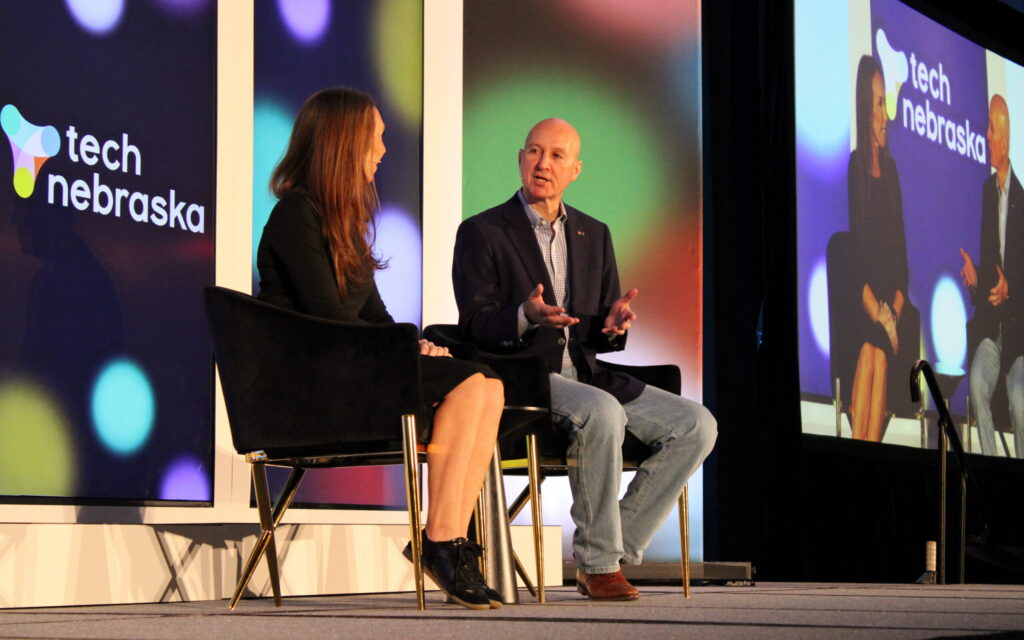
Ricketts encouraged Nebraskans to cooperate with one another, and he encouraged business and government leaders to reassure the people they serve that their worries are addressed.
He also said Nebraskans should deliberate with companies and policymakers on what taxes or other initiatives data centers should contribute to, such as funding schools and teachers.
“One of the things I always tell communities as well is, look, there’s a huge demand for data centers with AI, but it’s also social media, it’s all the things you want on your phone, all that,” Ricketts said. “So, you can ask for more.”
3. AI can be complicated. Get expertise and feedback.
On a government level, panelists discussing lobbying efforts emphasized the importance of definitions when it comes to shaping policies on AI. Case studies pointed to included Colorado’s and California’s efforts for regulation.
Panelists said policymaking required a balancing act of promoting needed safety and guardrails while not creating language that caused roadblocks in innovation or attracting companies.
“I think it really matters to meet with the industry, to meet with companies very early on, to better fully understand the technology that you are trying to regulate,” said Amy Bos, vice president of government affairs at NetChoice.
On a business level, panelists throughout the day spoke on the importance of paying attention to feedback when making business decisions.
Don’t Panic Labs Chief Strategy Officer and Chief Product Officer Brian Zimmer pointed to the dangers of “Nebraska nice” and said founders should be open to difficult conversations that could be more constructive in their entrepreneurial journeys.
4. Enterprise thinking could lead to new career trajectories.
Greene advised early professionals and career changers to embrace enterprise thinking. Rather than only learning one role within a department, she encouraged attendees to get to know all levels and positions of an organization.
“Even technology companies want strategic thinkers,” Greene said. “They want the people that are willing to think outside the box, the people that have flexibility and an understanding of broader views than just the space they’re trying to be in.”
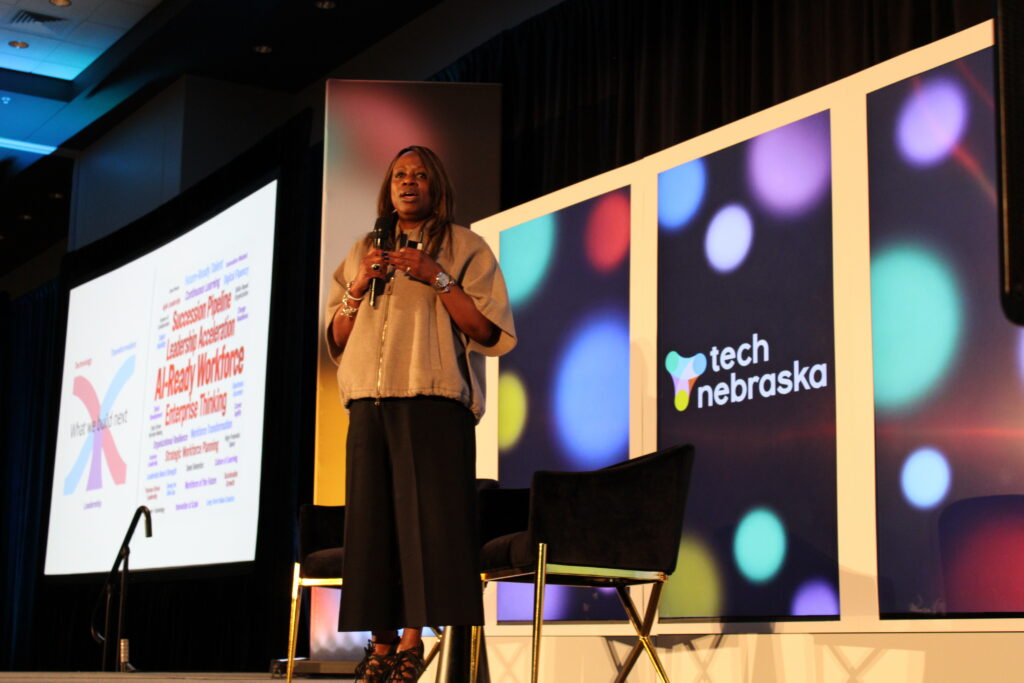
Greene added that her own curiosity and flexibility with learning new tech and tools made her adaptable across industries.
“There were times we were fighting to get a seat at the table, and now we are the table,” Greene said. “Literally, there is nothing that these businesses can do without the help, support and enablement of technology.”
5. Corporations cooperating with startups could lead to further business advantages.
The event gave opportunities for startup founders to share their entrepreneurial journeys, as well as give a select group to pitch their companies to the room. These included the startups Elite Tackle, FreightLabs, Grapple, Poll The Vote and Kifly.
Daragh Mahon, executive vice president and chief information officer at Werner Enterprises, said all the businesses in the room should be open to pitches from startups, arguing that these early companies were the key to innovation and the state’s economic viability. Mahon serves as board vice chair for Tech Nebraska.
“I think most founders would agree, even if you don’t intend to buy, even if you really just want to open the door to give them an opportunity to practice the pitch and give them feedback on the pitch, I think that would help tremendously,” Mahon said.
Last year, a key focus area for the summit was the ongoing pause on Nebraska’s Business Innovation Act. The funding opportunity for startups was eventually reinstated, but founders still experienced a delay in new contracts this year. You can read more here.

Leave a Reply