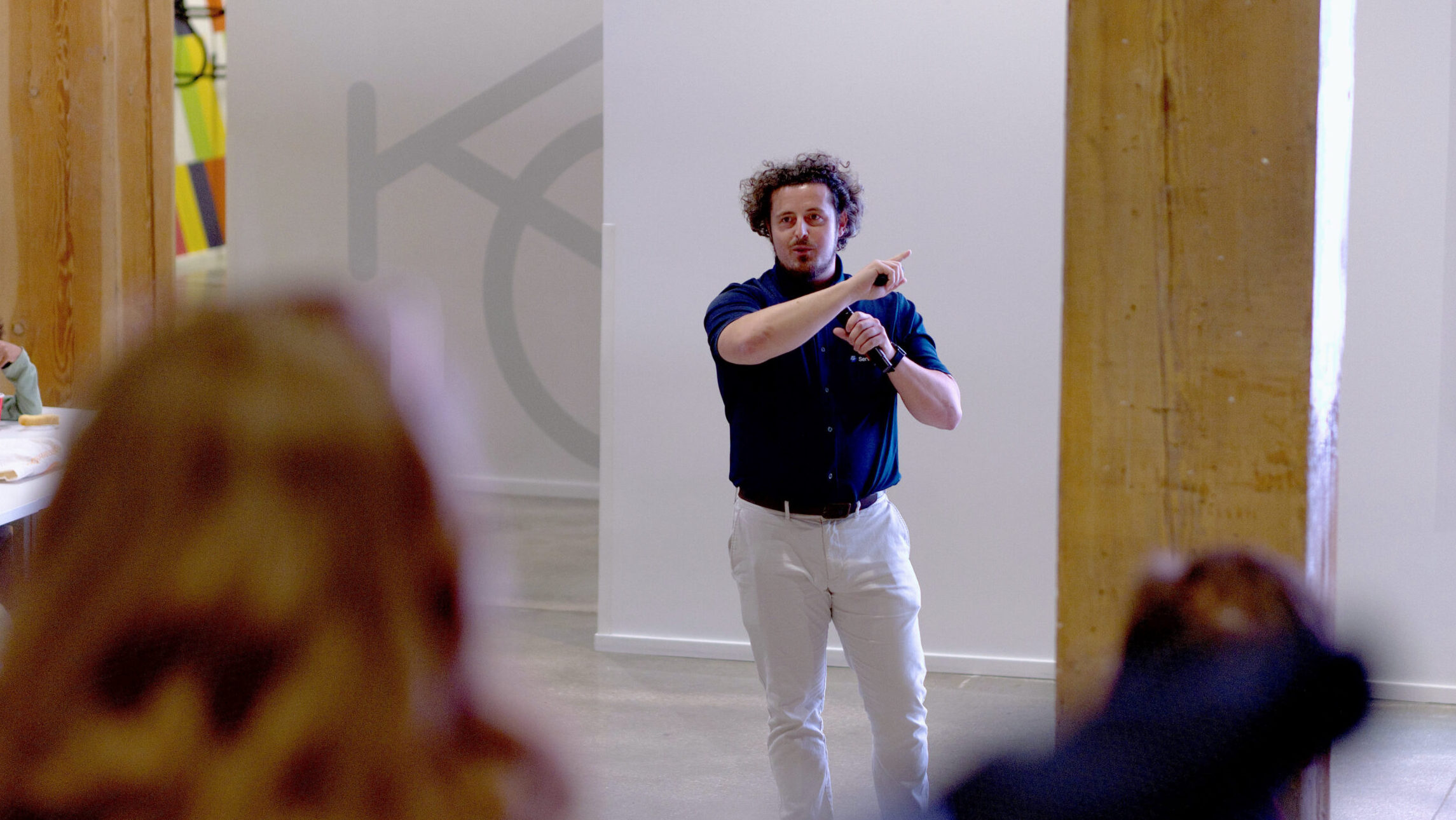
Meet Andrew Rogers, Co-Founder and CEO @ docology
Docology offers a software solution for health care professionals to integrate into their daily tasks. The Omaha-based startup uses artificial intelligence to help collect and organize patient records and build comprehensive medical timelines.
Its leadership has participated in the first Techstars Founder Catalyst Program for Omaha and Innosphere Life Sciences Incubator and has joined the latest cohort of Pipeline Fellows. The company also announced it will be presenting at the upcoming 2026 AUA Innovation Nexus, hosted by the American Urological Association to connect industry leaders and innovators.
What inspired you to become an entrepreneur or support other entrepreneurs?
My entrepreneurial journey actually started back in high school. I started my first small business working with high schoolers to do manual labor for people whose kids moved away in college. I played competitive soccer, and I had access to 16- to 22-year-olds that were basically willing to do manual labor.
So I hired a bunch of friends to go help parents of friends who needed Christmas lights hung, or sod moved from the front yard to the backyard, or tree stumps roped out, or decks pressure washed — all those things that parents asked their kids to do and then, all of a sudden, they turn around and all their kids are in college and there’s no one there to do it.
It was kind of the middle of the 2008, 2009 financial crisis. It felt like every job that was available to one generation was getting pushed down. All the jobs at McDonald’s or working at Chipotle or things like that were being filled by college students. Then, all the internships were being filled by recent college grads.
So that’s really where my entrepreneurial journey started. It ended up bringing me to Creighton. At Creighton, I started JayClean, which was an on-campus dry cleaning business for students, faculty and staff. We ran it while I was there.
I graduated and took a 10-year brief stint of what I’ll call intrapreneurship versus entrepreneurship. I got to be one of the first 10 employees at Carson Partners, which was a subsidiary of Carson Group — the financial services company here in Omaha.
I then transitioned from there. Took a little break and did some consulting work and things like that. I just needed to step away from corporate life for a while and then got here to docology. And I own and operate a commercial pressure-washing business, too.
Whether it was financial services, whether it’s a pressure-washing business, when I find unique, challenging problems, I want to go solve them. And so health care just felt like the next one to try and solve.
If I put on my 10-year plan 10 years ago that I was going to be CEO and co-founder of a healthtech startup, I would have said, “I have no idea what you’re talking about.” But here we are. Couldn’t be more excited about the opportunity.
What advice would you give yourself if you could go back in time to when you were just starting out?
Don’t be afraid to ask for help and to leverage your network or your resources.
I think one of the superpowers, especially of the Nebraska and maybe even the greater Midwest startup ecosystem, is everyone is one to two connections away from anyone you need to talk to. Probably pretty unique in Nebraska. Like, I could get on the phone with the governor in two phone calls.
There’s very little separation from a decision-maker at any large organization and somebody that wants to start something. So be willing to ask for help and just say, “Hey, do you know anyone that could help connect me here or there?”
The other one is actually something that (my) co-founder Tyler and I at docology talk about a lot. It’s that entrepreneurship just takes a lot of grit and determination. It’s the consistency of showing up.
When you have those aha moments or those great moments where something works and it clicks, that only happens because you’ve been showing up the right way for the last hundred times.
How do you stay motivated when things feel overwhelming — or stagnant?
First and foremost: leaning on my network community and my co-founders. One of the things that’s been the most exciting about this particular venture is having co-founders.
When you move from a corporate job to starting your own business, you transition from always having someone to pass something to. You have a boss, or you have a manager, or you have a leader, or you have somebody you can say, “I don’t know how to carry this any further. Can you carry it?”
And as soon as you start doing your own thing, you realize that you turn around to try and hand it to somebody and it falls on the ground and it shatters. You just have a big mess because there was nobody to hand it to.
So having co-founders has meant that we have a community of people — that we can lean on each other.
The other thing that I would say is, I go back often to my networking community of other founders: people that have been there before, people that have been there before recently.
I think one of the gaps that I realized early on is, it’s great to talk to people who have been wildly successful and started companies 20 or 30 years ago and they’ve had major exits. But what I have really needed is the person that’s two years ahead of me or three years ahead of me that’s going through and helping to navigate what the challenges we are (facing) today and more recently.
Lastly, for me, is just reminding myself of the purpose of why we’re doing this. We believe that we will change the way that our health care system operates. That’s a pretty incredible thing to try to achieve. So when it gets hard, just looking back at our mission and our vision.
What is the biggest challenge you’ve overcome and how did you overcome it?
I grew up in California and came out to Creighton to go to school. So I moved 1,800 miles away from home. I had no family. I knew two people when I landed in the state of Nebraska and was really in a new place. I was excited about that opportunity because I knew if I didn’t move then I would never leave. I wanted to at least try something new, and if I hated it, I knew I could always go back home.
I think the hardest thing that I’ve ever had to do is continually build a new community over the last 14 years that I’ve lived in Omaha. I started out with building a new community when I first came to Creighton and making new friends and all those things. Then it became building a new community when I graduated because more than half my peers left and they went to go someplace else.
(Then) we’re in corporate life, and you’re building a community there. Building a community once I started to have kids, and I don’t have the blessings of having grandparents in town that can help take care of our kids.
The same thing in a startup: It’s just constantly finding and building a new community.
How can the Nebraska community support you?
People approach, especially in the startup community here, how can we be better together a lot more than anyone takes a competitive stance. That’s a huge positive.
I think some of the biggest challenges that we have in this community is just volume. That could be volume of investors. That could be volume of healthtech-specific companies.
Everyone seems to be connected with or looking for the same talent and the same investors. We’re all kind of walking inside the same pool. So anything that we can do to expand that pool without losing things that make it great would be awesome.
Other things that I think the community could do to benefit one another (are) ways to practice the things that you need to be able to do really well to build a business: pitch practices and sales demos and things that are just a part of the everyday operations of running a business.
We host these great events: come do a demo day and come do a pitch competition and win and get all this money. But it’s the small things.
We’re doing some cool things here at the Catalyst (building) where all the companies that are here once a month get together and try to pitch to one another. And I’m not pitching you for money. I’m not pitching you for investment or anything like that. You’re another founder that’s been through this before and so you could give feedback.
I think just ways to give people more repetitions at the things that they need to do to grow and be successful.