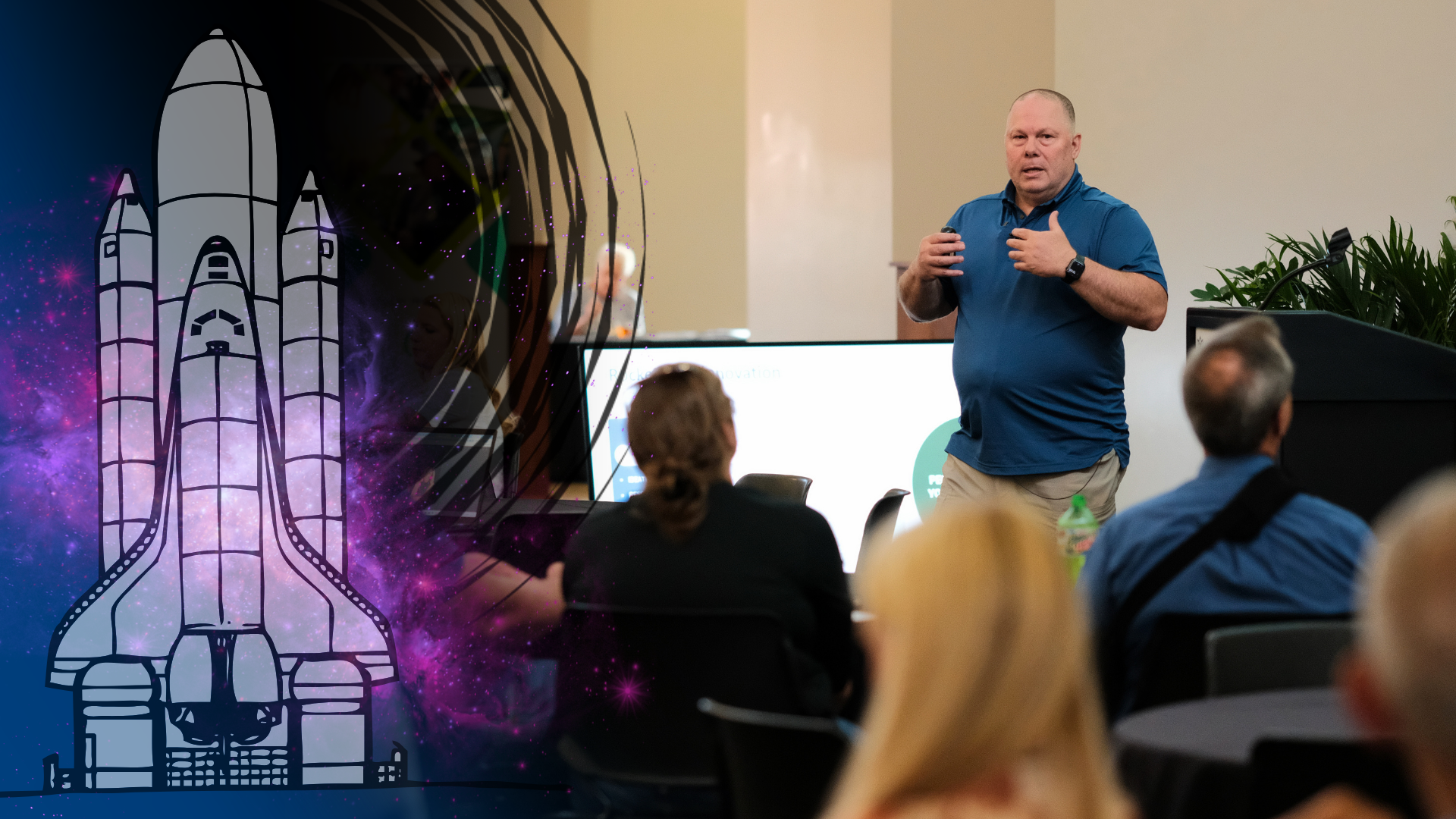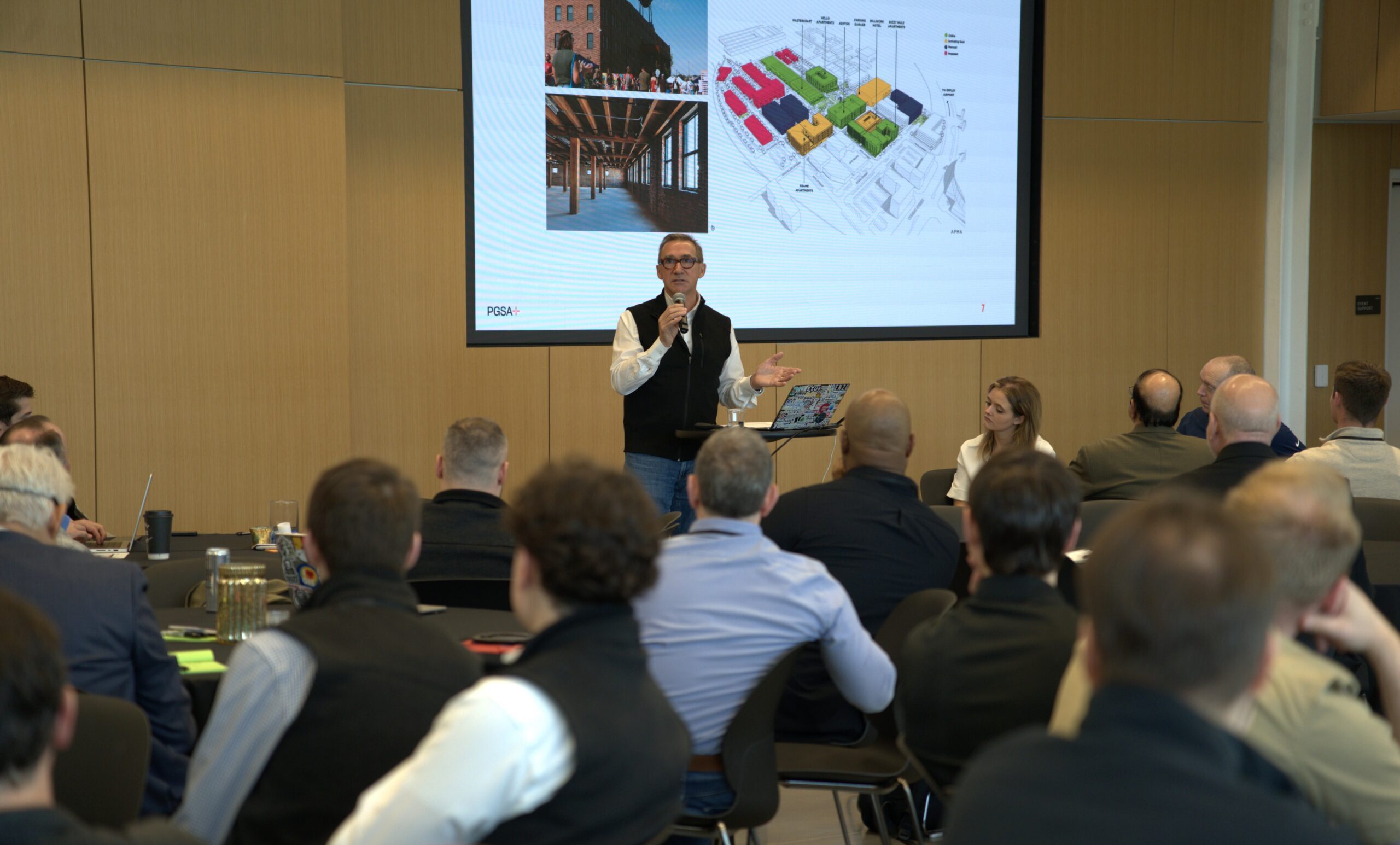
The world of venture capital can be intimidating for both first-time founders and investors experienced in other investment verticals. To break down barriers and exchange insights, the Gr8er Plains Summit in Omaha gave regional VC fund representatives and Nebraska startups the stage for conversations, questions and connections.
The event occurred May 1 at Catalyst Omaha. Continuing the momentum from the previous Piece by Piece Summit in 2025, the Gr8er Plains Summit was led by startup accelerator NMotion powered by gener8tor. Collaborators included the Greater Omaha Chamber, Nebraska Department of Economic Development and the university-affiliated tech transfer and entrepreneurial support organizations UNeMed and UNeTech.
NMotion Managing Principal Scott Henderson, Greater Omaha Chamber Senior Vice President of Economic Development Alec Gorynski and Omaha 100 President and CEO Trevon Brooks opened the morning by sharing their shared mission of bridging local opportunities to entrepreneurs and investors alike.
“There are opportunities to invest here,” Gorynski said. “In the business of economic development, it’s part growing our existing base, part attracting.”
Organizers provided a snapshot on current industry and investment trends in the Nebraska ecosystem. They also noted their efforts to tap into promising business networks in the state and abroad, such as the Berkshire Hathaway annual shareholder meeting. Voices from Israel and Canada were also present at the summit, including the Consulate General of Canada in Minneapolis.
On top of curated speakers, the day consisted of guided tours of entrepreneurial hubs and resources in Omaha, one-on-one investor meetings and festivities for networking. Additional pre-summit meetups occurred earlier in the week, convening groups such as college students and ventures sparked out of the University of Nebraska system.
The speaker lineup on the investor side:
- Paul Smith, founder and CEO of PGSA
- Victor Gutwein, founder and managing partner of M25
- Troy Vosseller, co-founder of gener8tor
- Jennifer Abele, founder and managing partner of VC 414
- Brett Calhoun, co-founder and general partner of Redbud VC
- Dan Kerr, managing partner of Flyover Capital
- Maggie Kenefake, founder and general partner of Iron Prairie Ventures
The speaker lineup on the founder side:
- Dusty Birge, founder and CEO of Fast Forward
- Kent Campbell, co-founder and CEO of Quantum Qool
- Stacy Dam, co-founder and CEO of Set Your Sites
SPN compiled five key takeaways for founders interested in pursuing venture capital:
1. Founders and their teams are the biggest selling points.
While signs of trajectory, uniqueness and an established business plan are important, investors agreed that a team’s demonstrated leadership, expertise and self-awareness of skill gaps were the primary signals of an appealing venture in which to invest. This was especially the case at early stages where milestones and certain data points haven’t been reached.
“I always say, ‘Two smart people are smarter than a genius,’” Smith of PGSA said. “And what I’m really getting at is, surround yourself with bright people who have complementary skills and you’ll be successful.”
2. Investors have their own needs and values. Look at the thesis.
Funds can range in the types of ventures they target. These include the stage of the company, the industries it serves or its solution or team makeup that aligns with a fund’s larger mission. For example, Kenefake of Iron Prairie Ventures discussed her fund’s focus on industrial tech.
VC can be a means to spur economic development in the communities startups call home. Investors can be driven to make positive impacts in their cities and on their neighbors.
But funds still need returns on their investments — both to make money and to persuade other investors to contribute to future funds. And these successes can lead to greater impacts.
“Getting out of the gates with a winner is your No. 1 responsibility as a leader in a business,” Smith said. “And what that means is a careful assessment of the opportunity space that you’re looking at and that careful blend of seizing opportunity and securing that through the lynchpin deals that really lock the opportunity.”
3. Overcommunicate.
Investors agreed upon the importance of constant communication. Speakers admitted that some investments have resulted from cold emails, but they emphasized that a combination of warm introductions, knowledge of a fund’s thesis and updates on breakthroughs can tip odds toward an investment.
Even if a founder is denied after a first round of due diligence, fund representatives said that doesn’t mean that has to be the end of their interactions.
“I think sometimes entrepreneurs view it too much as like a one-time-only deal, when really I like to evaluate lines instead of just a single dot,” Vosseller of gener8tor said. “So, I think maintaining that communication, being persistent, is a great way to stay on the radar.”
And once a startup becomes a portfolio company, that doesn’t mean the communication should come to an end. Investors voiced their appreciation for consistent updates of both wins and struggles.
“It can’t all be good news,” Abele of VC 414 said. “Like I actually want to know if there’s a problem and figure out how I can help.”
4. Make time in the community.
Networking meetups, pitch competitions, startup showcases and university award ceremonies are more than just a means to compete for cash prizes and gather LinkedIn connections. Investors said they often make time for these events — even starting their own — to be out in the community and discover investment leads.
Fund partners are unable to be everywhere at once. They said they rely on referrals from trusted ecosystem stakeholders to identify strong candidates for their portfolios. By connecting with prominent community mentors, leaders and support organizations and joining well-celebrated incubator and accelerator programs, founders can find themselves a name drop away from an investor introduction.
Investors added that they have received ideal candidates through the recommendations of other founders they have invested in.
5. Be prepared for pivots.
The journey of building a startup and receiving venture capital isn’t necessarily going to be a straightforward, upward progression. While investors voiced their desires to fill needs in the Midwest, they said there were still limits and barriers to their contributions.
“As far as attracting capital here, we do spend a lot of time trying to build relationships with capital that’s on the coast because that’s probably always where 80-something percent of the capital is going to be,” Gutwein of M25 said. “Being connected warmly into coastal capital networks will be important, even if you get your first round here, even second round here.”
“Eventually, if you’re successful, you will have to raise money from outside of your state, outside of your region here,” he said.
On the entrepreneur side, founders encouraged individuals early in their journeys to connect with ecosystem resources and mentors. While having self-confidence is important — especially when flexing personal expertise over outside opinions — founders said additional confidence in decisions can come from trusted advisers and investors committed to the success of the company.