
For Phillip Koolhoven, artificial intelligence and vibe coding have been instrumental in developing Kova Dating. His early-stage dating app, Kova, emphasizes video calls during scheduled times to encourage users to have real conversations. Still working a separate full-time job in the Omaha area, Koolhoven said AI has enabled him to build his matchmaking solution despite a lack of time and money.
Vibe coding is the act of using AI to develop software through prompting rather than a developer writing and editing code by themselves. The practice has gained popularity in the startup world, giving founders of all skill levels the ability to quickly produce prototypes without the need of large teams or the expenses that come with hiring and/or contracting software development talent.
Koolhoven has had the idea for Kova for a few years, but he didn’t have the extensive software background to make it happen. In February, he started using AI tools such as Claude, Gemini and ChatGPT, which he said empowered him to dive into programming and brainstorming features.
The solopreneur has always had a desire to be his own boss and support a team of employees. He took inspiration from popular figures in the business world, such as Mark Cuban from “Shark Tank,” who have gone viral online from their advice and motivational quotes.
Koolhoven has dabbled in other ventures, such as vending machines and clothing brands, but he believes his current startup is solving real problems: swiping fatigue, ghosting and other concerns he and big-name competitors have identified from the crowded dating app industry.
“AI has just allowed me to get into software development,” Koolhoven said. “Beyond the past couple years of trying to build and scrapping (coding attempts), before that, I had never thought of trying to develop an app or anything like that.”
Koolhoven is not alone in setting out on an entrepreneur’s journey. According to LinkedIn, there was a recent 69% growth of LinkedIn profiles in the U.S. adding “founder” to their titles. The U.S. Census Bureau has also noted how business formation in the country is on the rise.
The advantages of AI for coding, spoken across startup meetups, tech conferences and success stories in the state, are hard to ignore. Even experts in the software space, such as Don’t Panic Labs Managing Partner and Chief Operating Officer Bill Udell, note their prominent use of AI-generated code.
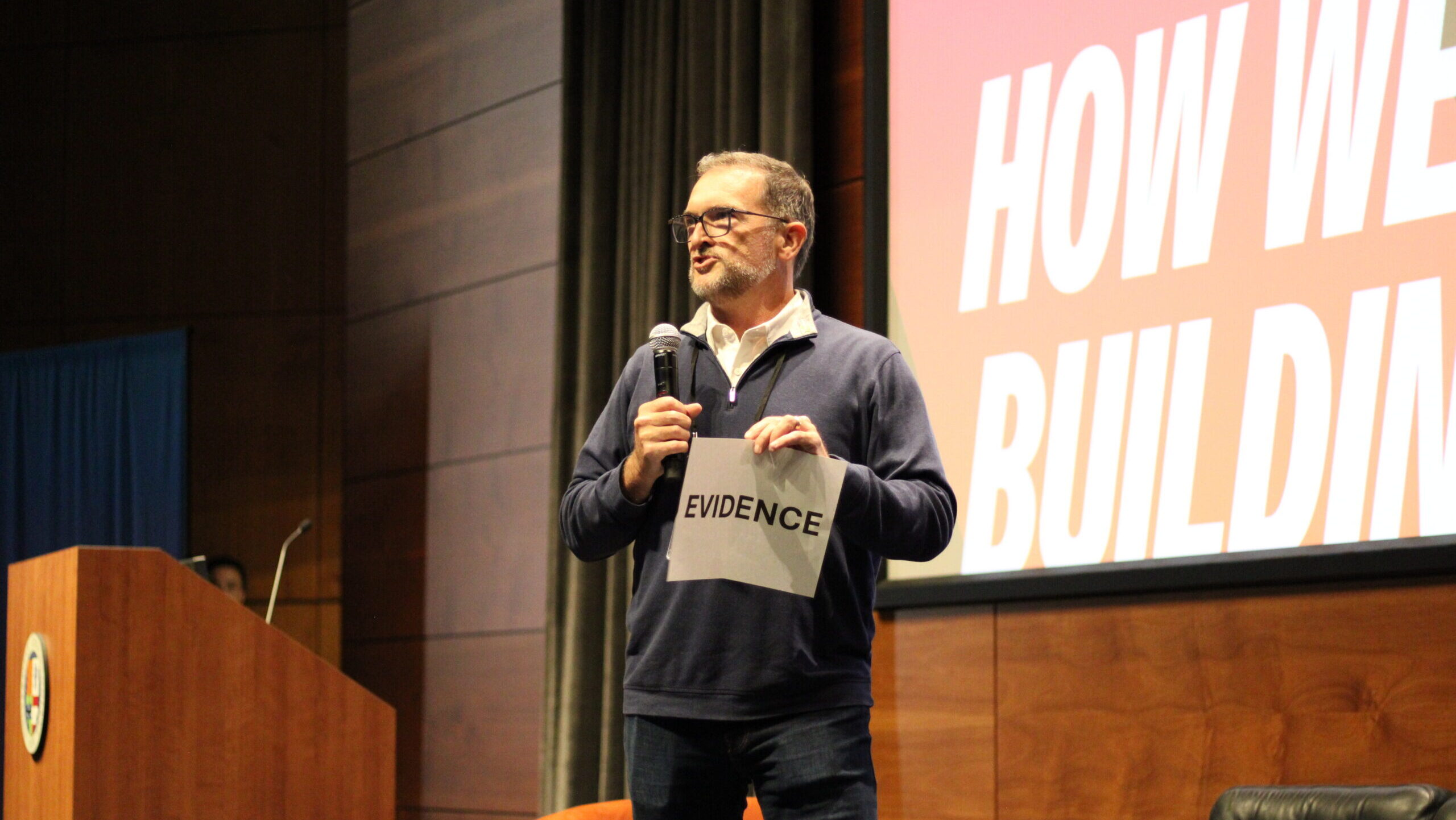
But Udell took the stage at Hustle Conference 2026 in September to give founders a warning. During the event, he reminded attendees not to lose sight of core truths for forming a business.
“Delusion requires you to ignore evidence,” Udell said. “Entrepreneurship is the opposite. Entrepreneurship requires you to figure out why your idea may not be true. Otherwise, it’s delusion.”
Don’t Panic Labs is a software engineering and business consulting company based in Lincoln. Its team has been active in the startup community, spreading the word of its updated strategy to help founders think about their business models in the age of AI.
Such warnings have sparked discourse on how to best proceed with a startup while using the best tools available.
In an interview with SPN, Udell emphasized how slow the process used to be for building a startup. With prototyping and coding taking time, there used to be more opportunities to pause, ask questions and turn to help. Today, founders can continuously build — without ever having to pause and gather evidence that proves the viability of their businesses.
His advice to aspiring founders was to pay attention to the “brittleness” of their software as they program and seek expert help when faced with recurring bugs or questions regarding legal, privacy and strategy concerns.
“The world is now flooded with products that solve problems,” Udell said. “And nobody’s given a lick of thought as how they actually go to market.”
Investor insights
Speaking to SPN earlier this year, PGSA Venture Capital Associate TJ Andreasen noted how AI enables both aspiring founders and entrepreneurial-minded employees to quickly tinker together software solutions. Their only expertise could be their lived experiences and desires to overcome work obstacles.
Companies who then build their own software solutions internally might not see the need to buy products from outside businesses. As a result, they may be less likely to consult with startups.
“Some of these big companies will just start building more bespoke products in-house, or custom products in-house, for a lot cheaper than what a software subscription would cost if they went to try to find that tool out there,” Andreasen said.
Invest Nebraska Investment Manager Shelby Strattan agreed on the equalizing speed of AI for prototyping, as well as the need for entrepreneurs to think about how to stand out from the many players appearing in the market as a result.
“If everyone can be a builder, simply having a functioning software product becomes less differentiated,” Strattan said in an email to SPN.
In this new startup landscape, Strattan said, investors are placing more importance on ventures that showcase metrics of traction, go-to-market strategies and unique traits that are difficult to replicate. These can include proprietary data, technical IP “or something beyond software itself” — such as industry knowledge.
“Founders should think of these tools as an opportunity to get in front of customers and validate demand faster, rather than just an opportunity to build more,” Strattan said.
Founders may now need less capital to start as AI promises to help founders overcome the expensive hurdles that come with developing a minimum viable product. Andreasen said funds could instead go to other efforts, such as go-to-market strategies.
“Eventually, you probably will want to bring on an engineer in-house that could maybe fix some of those bugs that are in the product, but you might as well just try to build something and see how it works,” Andreasen said.
In an interview about her team’s ongoing investment goals, Proven Ventures Co-founder and General Partner Erica Wassinger said customers are ultimately the deciding factor in whether a business is a success.
“You build a company around a customer. And AI can’t do that for you in totality,” Wassinger said. “You have to talk to people. You have to connect with the human. You have to get them to swipe their credit card.”
The future for founders
In Nathan Preheim’s view, the next generation of entrepreneurs have received a great advantage with AI. The director of Creighton University’s Greisch Center for Enterprise Value said he believes everyone now has the power of a computer science degree at their disposal.
When teaching his students, he encourages them to play with this technology but to also think intentionally about their business ideas: Are they solving a problem? Do customers want it?

“Being able to build isn’t the superpower,” Preheim said. “It’s knowing what to build.”
In the case of Kova Dating, Koolhoven said the development process hasn’t been smooth. He has dealt with late nights correcting software bugs and navigating the requirements to get on the Apple App Store. He recently announced Kova has joined the Google Play Store, but he plans to focus on development for all users across platforms in the new year.
Koolhoven is motivated and believes in the impact his work can have, both for customers and future hires.
SPN asked if he had considered reaching out to different business resources in the community or attending local events for support, such as 1 Million Cups. He said he wasn’t aware of such resources and was worried about potential reception to his startup.

Koolhoven has had some positive responses from different Facebook and Omaha event groups he has joined. His focus has just been on building the app and working at his day job.
“I am getting invited to certain events, like some entrepreneurial events and stuff like that,” Koolhoven said. “So, I’ve been looking into those.” He plans to attend some of these meetups when his afternoons and evenings are free.
Preheim emphasized how startups today can be made up of incredibly small teams by using AI. However, he didn’t want to discount the importance of collaborating with peers as an entrepreneur.
“This is still really lonely work,” Preheim said. “There’s tremendous value in rounding out your skill set with others, and you’ve got accountability, you’ve got thought partners, and frankly, it’s just way more fun with a team.”


Leave a Reply